The Dead Man Who Sued America: How a Maine Lobsterman's Fake Funeral Changed Who Owns the Sea
The Funeral That Never Was
On a fog-thick morning in October 1847, the fishing village of Pemaquid Point, Maine, gathered to bury Josiah Blackwood. The weathered lobsterman had supposedly drowned when his boat capsized in a nor'easter three days prior. His wife Sarah wept appropriately. The local pastor delivered a sermon about the sea claiming another soul. But as dirt hit the empty coffin, Josiah was already fifty miles inland, growing out his beard and practicing a new signature.
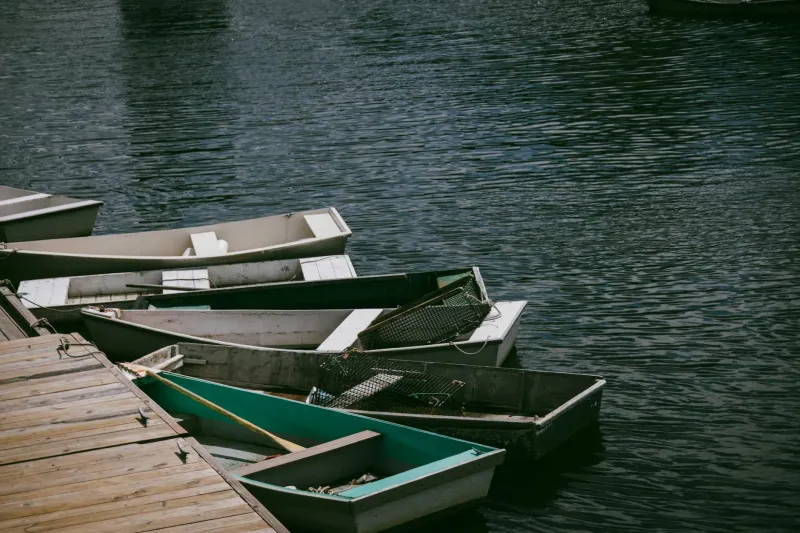
 Photo: Pemaquid Point, Maine, via coursesandcastles.com
The man they buried that day had lost everything to a shipping contract gone wrong—his boat, his traps, even the small dock his grandfather had built. What they didn't bury was his rage, or his peculiar gift for reading legal documents that most fishermen couldn't even spell.
When the Sea Stops Being Free
Blackwood's troubles began with what seemed like a stroke of luck. A Boston shipping company offered him an exclusive contract to supply lobster for their expanding restaurant trade. The terms looked generous—until the fine print revealed that accepting the contract meant surrendering his fishing rights to a three-mile stretch of coast his family had worked for generations.
When Blackwood tried to back out, he discovered he'd signed away more than fishing rights. The shipping company claimed ownership of his dock, his storage sheds, and even the rocky outcropping where he'd always hauled his traps. Overnight, a man who'd never lived more than a stone's throw from salt water found himself legally barred from the sea.
"They took my ocean," he would later write in letters discovered in a Portland courthouse basement. "A man can't live when they steal the thing that's been free since God made it."
The Education of a Ghost
As "Samuel Morrison"—a name he borrowed from a headstone in a Boston cemetery—Blackwood spent his supposed afterlife haunting law libraries. He taught himself to read contracts, maritime law, and property statutes. He discovered that the shipping company's claims rested on a patchwork of colonial-era grants and post-Revolutionary legal interpretations that had never been properly tested in court.
More importantly, he learned he wasn't alone. Across New England's coast, fishing families were losing ancestral rights to corporations armed with legal documents most fishermen couldn't read. The sea that had fed their families for centuries was being carved up like a city lot.
Blackwood saw an opportunity. If he could prove the shipping company's claims were legally worthless, he might not only reclaim his own livelihood—he could establish a precedent that would protect every small fisherman from Maine to Massachusetts.
The Case That Wouldn't Die
In 1851, Samuel Morrison filed the first in what would become a thirty-year cascade of lawsuits. His strategy was brilliant in its simplicity: he argued that the ocean itself couldn't be owned, only used. Maritime rights, he claimed, belonged to the people who worked the water, not the companies that financed them.
The shipping company fought back hard. They hired Boston's finest lawyers and dug up every colonial charter they could find. But Morrison had something they didn't—time, desperation, and an encyclopedic knowledge of every fishing family's story from Eastport to Provincetown.
He filed appeals, counter-suits, and motions that kept the case alive through three different courts. When he lost on one front, he'd attack from another angle. When judges ruled against him, he'd find new plaintiffs—other fishermen whose rights had been trampled by similar contracts.
The Accidental Revolution
By 1878, Morrison's case had grown into something much larger than one man's quest for revenge. His legal arguments had been cited in dozens of other maritime disputes. His research into colonial fishing rights had become the foundation for new legislation protecting coastal access. His insistence that the sea belonged to its users, not its financiers, had quietly revolutionized how American courts thought about water rights.
The shipping company that had stolen Josiah Blackwood's livelihood had long since gone bankrupt. But Samuel Morrison kept fighting, driven by a vision of justice that had expanded far beyond his original grievance.
When he finally died in 1881—this time for real—his funeral was attended by fishermen from six states. They came not just to honor a fighter, but to celebrate the legal framework he'd accidentally created. Morrison's precedents had protected thousands of fishing families from the kind of corporate theft that had once destroyed his life.
The Ghost's Legacy
Today, the Morrison Doctrine—as maritime lawyers still call it—remains the foundation of American coastal property law. Every time a fishing family successfully defends their traditional grounds against development, every time a small harbor resists corporate takeover, they're invoking legal principles established by a dead man who refused to stay buried.
Josiah Blackwood's gravestone still stands in Pemaquid Point's cemetery, marking an empty grave. But his real monument stretches along thousands of miles of American coastline, where the sea remains free for those who know how to work it.
Sometimes the most lasting victories come from people who've already lost everything—and have nothing left to lose but the fight itself.