When Doctors Said 'Prepare to Die,' These Five Americans Built Empires Instead

The Clarity That Comes With Counting Days
There's something about being told you're dying that strips away everything except what truly matters. While healthy people waste years debating what to do with their lives, the terminally ill often discover a brutal clarity that produces extraordinary results. Here are five Americans who turned medical death sentences into business empires—proving that sometimes the end is just another kind of beginning.
1. The Tuberculosis Patient Who Built Retail's Future
In 1902, doctors gave James Cash Penney six months to live. The 27-year-old had contracted tuberculosis while working as a store clerk in Colorado, and his physicians recommended immediate rest in a sanitarium. Most patients in his condition spent their remaining time in quiet resignation. Penney spent his in furious planning.
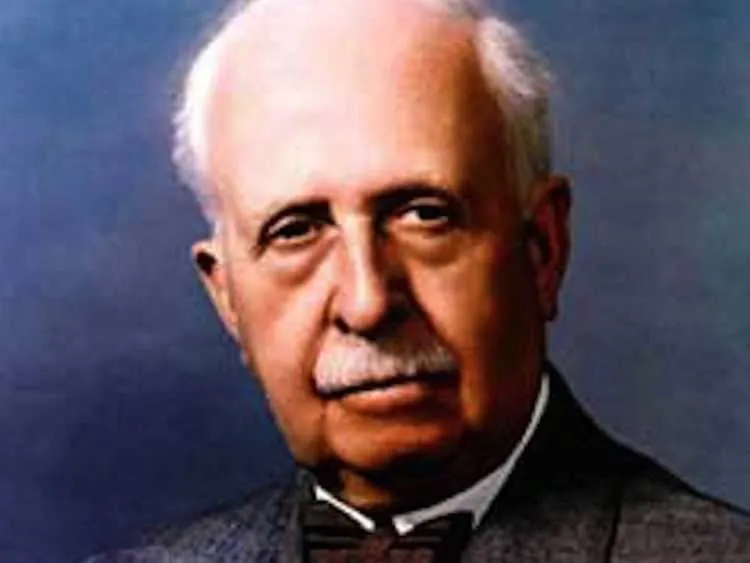 Photo: James Cash Penney, via alchetron.com
Confined to bed but mentally sharp, he used his forced stillness to study every aspect of retail that had frustrated him as an employee. He analyzed pricing strategies, supply chains, and customer behavior with the intensity of a man who knew he'd only get one chance to build something lasting.
When his health unexpectedly improved after eighteen months of mountain air and rest, Penney had blueprints for a new kind of department store—one that would treat customers and employees with unprecedented fairness. He opened his first J.C. Penney store in 1902, using principles he'd developed while supposedly dying. The company he built during his "final" months would employ over 200,000 people at its peak.
"Sickness taught me that time is the only currency that matters," Penney later wrote. "Healthy men waste it. Dying men spend it wisely."
2. The Heart Patient Who Revolutionized Food
Dr. John Harvey Kellogg's younger brother Will was supposed to be the family failure. While John ran the famous Battle Creek Sanitarium, Will struggled with severe heart problems that left him weak and frequently bedridden. In 1894, at age 34, his doctor told him that continued physical exertion would likely kill him within the year.
Instead of accepting invalidism, Will Kellogg used his enforced rest to obsess over his brother's experimental health foods. Lying in bed, he developed new techniques for processing grains that would make nutritious food more palatable and shelf-stable. His heart condition had given him something his energetic brother lacked—unlimited time to perfect recipes through endless small adjustments.
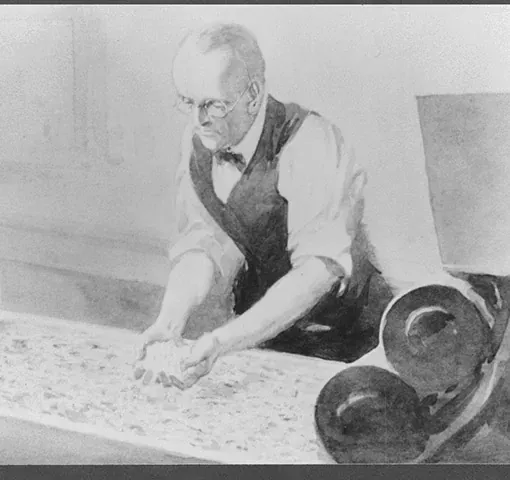 Photo: Will Kellogg, via www.wkkellogg.com
When Will finally launched the Kellogg Company in 1906, he was still considered the sickly Kellogg brother. But his years of patient experimentation had created breakfast cereals that would feed millions and generate billions. He lived to age 91, long enough to see his "dying man's hobby" become one of America's most recognized brands.
3. The Cancer Survivor Who Created Modern Cosmetics
Estée Lauder's origin story usually focuses on her immigrant roots and beauty ambitions. What's rarely mentioned is that her empire began during a 1944 cancer scare that doctors initially believed was terminal. At 36, with two young children, Lauder was told she likely had months to make peace with her life.
Instead of preparing for death, she became obsessed with creating a beauty product that would survive her. Working from her kitchen during chemotherapy treatments, she developed a face cream formula that combined European techniques with American marketing instincts. Her illness had stripped away her fear of failure—what was business rejection compared to medical mortality?
When her cancer diagnosis proved incorrect (the initial biopsy had been contaminated), Lauder had already created the product line that would launch her empire. Her brush with death had taught her that perfection was less important than persistence. The Estée Lauder Companies now generate over $14 billion in annual revenue.
4. The Paralyzed Architect Who Built America's Skylines
Louis Sullivan was 31 when a construction accident left him partially paralyzed and told he'd never practice architecture again. The 1881 injury had damaged his spine, leaving him with limited mobility and constant pain. Traditional architectural practice—with its emphasis on site visits and hands-on supervision—seemed impossible.
 Photo: Louis Sullivan, via www.architecturelab.net
But Sullivan's physical limitations forced him to develop a new approach to building design. Unable to constantly travel to construction sites, he created detailed drawings and specifications that left nothing to chance. His enforced attention to paper planning revolutionized how architects communicated with builders.
Sullivan's "disability-driven" precision became the foundation of modern skyscraper construction. His detailed plans and systematic approach to steel-frame buildings made possible the rapid urban development of cities like Chicago and New York. The man who was told he'd never build again became the architect whose techniques built America's skylines.
5. The 'Dying' Farmer Who Fed the World
Norman Borlaug was 25 when a severe case of pneumonia nearly killed him in 1939. Doctors told the young agricultural scientist that his lungs were permanently damaged and that he should avoid physical exertion for the rest of his shortened life. Traditional farming—the career he'd planned—was out of the question.
Instead of abandoning agriculture, Borlaug used his health limitations to focus on plant breeding and crop genetics. His inability to do heavy farm work forced him to think about feeding people through science rather than muscle. Working primarily in laboratories and experimental plots, he developed high-yield wheat varieties that could grow in harsh conditions.
Borlaug's "sedentary" agricultural research launched the Green Revolution that fed over a billion people and earned him the Nobel Peace Prize. The man who was too sick to farm became the scientist who taught the world how to grow food more efficiently.
The Unexpected Gift of Limitations
These five Americans shared more than medical crises—they shared the peculiar clarity that comes with thinking your productive life is over. Freed from the luxury of endless tomorrows, they focused on building something that would matter immediately and last indefinitely.
Their stories suggest that sometimes our greatest limitations become our most powerful advantages. When time is short and options are few, the human mind often finds solutions that comfort and abundance never could have produced.
In a culture obsessed with health and longevity, these unlikely legends remind us that mortality—or the fear of it—can be the most productive teacher of all.