When Sound Becomes a Liability
Thomas Whitmore lost most of his hearing in a telegraph office explosion in Cincinnati, 1887. The blast that damaged his eardrums should have ended his career—telegraph operators lived by sound, translating the rapid clicks of Morse code into the messages that kept America connected. Instead, it launched him toward a discovery that would revolutionize how he understood information itself.
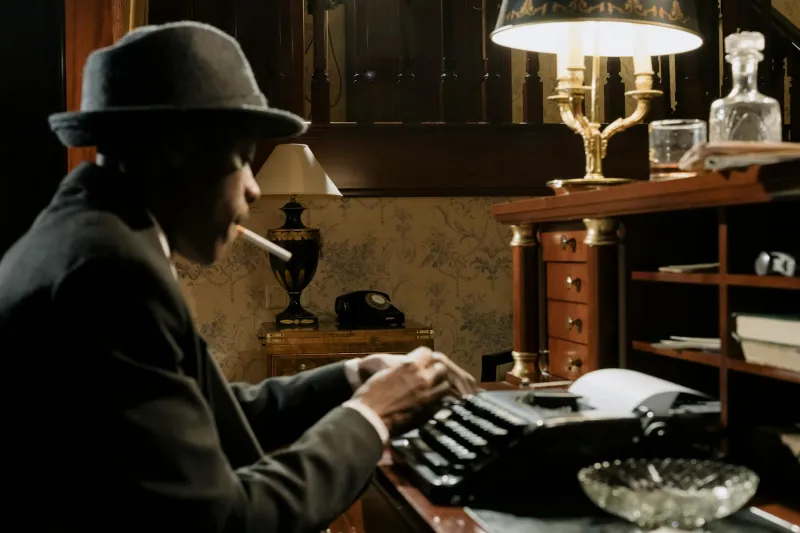
 Photo: Thomas Whitmore, via static1.srcdn.com
Unable to rely on the audio cues that other operators took for granted, Whitmore was forced to develop alternative ways of reading the electrical signals that pulsed through the telegraph lines. What started as adaptation became innovation, and what seemed like a career-ending disability transformed into an almost supernatural ability to detect patterns that others missed entirely.
Learning to See What Others Heard
The telegraph office in Cincinnati gave Whitmore six months to prove he could still do the job. Other operators relied on the distinctive rhythms of different senders—each telegrapher had a unique "fist" that experienced receivers could recognize instantly. Whitmore had to find other ways to identify who was sending what.
He began by placing his fingertips directly on the telegraph key, feeling the vibrations that accompanied each transmission. Different operators pressed the keys with different pressures and held them for slightly different durations. What sounded identical to the ear felt distinctly different to sensitive fingertips.
More importantly, Whitmore discovered he could feel irregularities in transmission timing that audio-focused operators missed. A sender who was nervous, tired, or drunk produced subtly different electrical patterns. Someone transmitting under pressure—perhaps relaying urgent financial news—had a distinctive rhythm that Whitmore could detect through touch alone.
The Patterns Behind the Patterns
Within two years, Whitmore had developed skills that surpassed those of operators with perfect hearing. He could identify individual telegraphers across hundreds of miles of wire, detect when someone was copying a message versus composing it in real time, and even sense when transmission equipment was beginning to fail before it affected message clarity.
But his most valuable discovery was that financial information created unique transmission patterns. Stock prices, commodity reports, and banking communications all generated distinctive electrical signatures that Whitmore could feel but couldn't initially explain.
"Tom could tell you if a message contained good news or bad news before he'd translated the first word," recalled fellow operator James McKenna. "He'd feel something in the wire and say, 'This one's going to move the wheat market' or 'Somebody's about to lose a lot of money.' We thought he was guessing until we realized he was never wrong."
The Move to Wall Street
In 1889, a financial house in New York recruited Whitmore specifically for his unusual abilities. The firm had heard rumors about a telegraph operator who could predict market-moving news before anyone else had read it. They offered him triple his Cincinnati salary to manage their private telegraph lines.
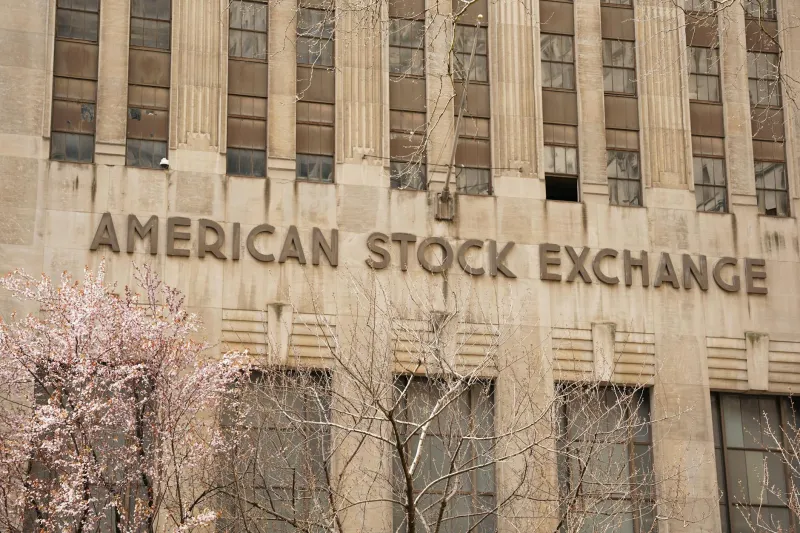
 Photo: Wall Street, via img.freepik.com
Wall Street in the 1890s ran on information speed. The difference between receiving financial news a few minutes early could mean the difference between profit and catastrophic loss. Whitmore's employers initially thought they were hiring him for faster message processing. They discovered they'd acquired something far more valuable: a human early warning system.
Whitmore's first major success came during the Panic of 1893. As financial institutions began failing across the country, he started detecting unusual patterns in the telegraph traffic flowing between banks. The electrical signatures felt different—more urgent, more erratic. He advised his firm to liquidate certain positions days before the news became public.
"Thomas felt the panic coming through the wires before anyone knew there was going to be a panic," wrote financial journalist Henry Clews. "He was reading the nervousness of telegraph operators hundreds of miles away, and that nervousness was telling him something about the markets that no amount of financial analysis could reveal."
The Science of Silent Trading
What Whitmore had discovered, decades before anyone understood the science behind it, was that human emotional states affect fine motor control in measurable ways. Telegraph operators under stress transmitted differently than calm operators. The tiny variations in key pressure and timing created electrical signatures that sensitive equipment—or sensitive fingers—could detect.
Financial news created the strongest emotional responses in telegraph operators. A telegrapher sending word of a bank failure pressed the keys differently than one transmitting routine stock prices. Someone relaying news of a major gold strike had a different electrical signature than someone reporting wheat futures.
Whitmore learned to read these emotional signatures like a seismograph reads earthquakes. He could detect market stress, panic, euphoria, and uncertainty flowing through the telegraph lines hours before the actual news became public.
The Competitive Edge That Couldn't Be Copied
By 1895, Whitmore's abilities had made his employers one of the most successful trading houses on Wall Street. Other firms tried to replicate his methods by hiring deaf or hard-of-hearing telegraph operators, but they discovered that Whitmore's skills weren't just about hearing loss—they were about the specific way he'd learned to compensate for it.
His combination of tactile sensitivity, pattern recognition, and intuitive understanding of human psychology couldn't be taught or easily replicated. He'd developed a form of market analysis that was part science, part art, and entirely dependent on abilities that had emerged from his specific disability.
Competitors who tried to decode his methods found themselves studying the wrong things. They focused on the messages themselves, while Whitmore was reading the emotional state of the people sending them.
Beyond the Ticker Tape
Whitmore's success continued into the early 1900s, even as newer technologies began replacing the telegraph systems he'd mastered. He adapted his methods to telephone lines and early electrical stock tickers, always finding ways to read the human emotions embedded in electronic communications.
His career peaked during the market volatility of 1907, when his early warnings helped his firm avoid the worst losses of that year's financial panic. By then, he was earning more than most bank presidents, and his insights were sought by some of the most powerful financiers in America.
"Tom Whitmore could feel money moving before it moved," wrote financial historian Burton Hendrick. "He'd built a career on reading the invisible signals that everyone else ignored, and in doing so, he'd discovered something fundamental about how information and emotion travel together."
The Legacy of Different Perception
Whitmore retired in 1912, having transformed what should have been a career-ending disability into a competitive advantage that no one else could match. His story demonstrates how perceived limitations can become unexpected strengths when approached with creativity and determination.
More broadly, his success illustrated a principle that modern neuroscience has confirmed: when the brain loses one input source, it often compensates by becoming extraordinarily sensitive to others. Whitmore's partial deafness forced him to develop tactile and visual processing abilities that gave him insights unavailable to operators with normal hearing.
His career also revealed something important about information itself: the emotional context surrounding a message often contains as much valuable data as the message's content. By learning to read those emotional signatures, Whitmore had discovered a form of market analysis that was decades ahead of its time.
The telegraph operator who lost his hearing found something more valuable than sound—he found a way to feel the pulse of American commerce flowing through copper wires, and he turned that pulse into one of Wall Street's most remarkable success stories.