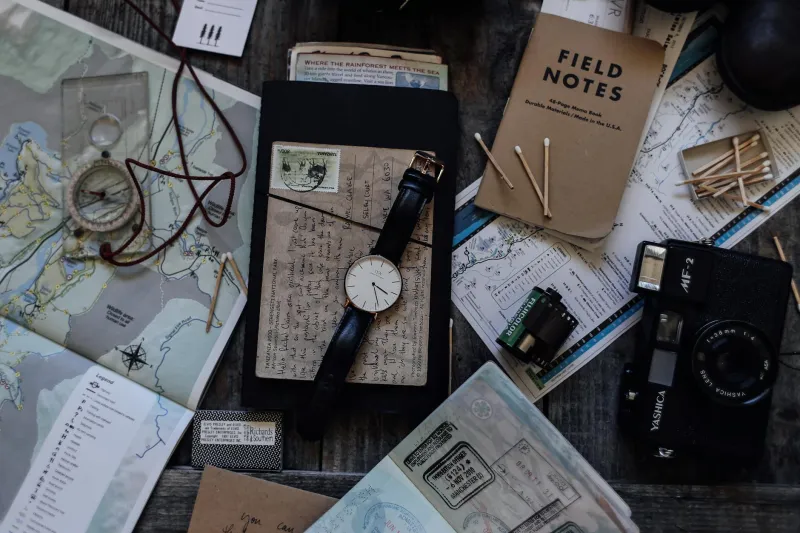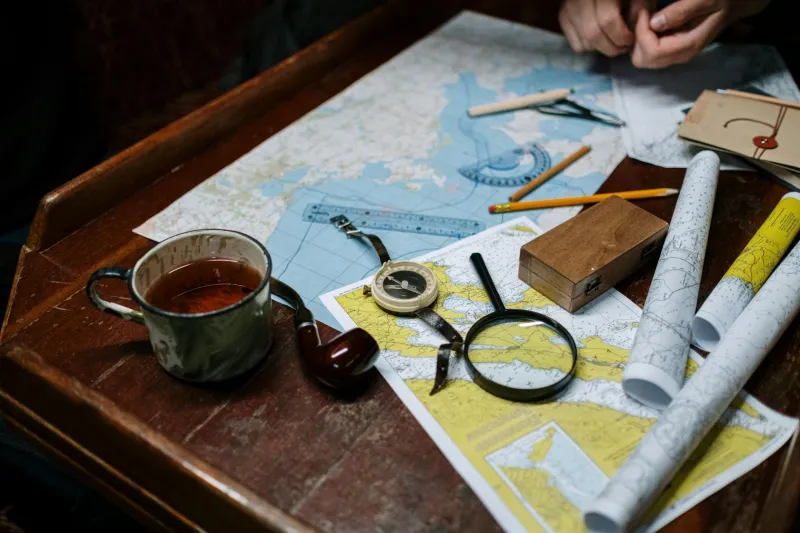
Miguel Herrera kept the original map folded in his wallet until the day he died, even though by then he owned half the neighborhoods it depicted. Drawn in fading blue ink on a piece of paper torn from a school notebook, it showed the streets of Houston as he'd imagined them in 1953—not as they were, but as they could become.
The map was crude, almost childlike. Street names were misspelled, distances were wildly inaccurate, and entire sections of the city were missing. But it contained something that no official city planning document possessed: the vision of an outsider who could see possibilities where others saw only problems.
The Journey Begins with a Drawing
Herrera had created the map during his final weeks in Guadalajara, Mexico, using information gathered from letters sent by his cousin Carlos, who had been working construction in Texas for two years. Carlos wrote about neighborhoods with strange names—Montrose, River Oaks, the Heights—describing them in fragments that Miguel carefully assembled into his homemade atlas.
"He told me about the rich areas where the houses were big but the lots were bigger," Herrera would recall decades later. "And the poor areas where families like ours could afford to live, but maybe not forever. I wanted to understand how they connected, how someone might move from one to the other."
When Herrera finally boarded the bus to Houston in September 1953, he carried everything he owned in a canvas bag: two changes of clothes, a Spanish-English dictionary, five dollars in American currency, and that hand-drawn map.
Reading a City Through Fresh Eyes
Herrera's first job was mixing concrete for a crew building foundations in what would later become the Galleria area. In 1953, it was mostly empty land—flat, hot, and seemingly worthless. But Herrera noticed things his American-born colleagues didn't: the way the soil drained after heavy rains, how close it was to the main roads leading downtown, the fact that wealthy families were already building homes just a few miles away.
Every evening after work, he would walk the neighborhoods, updating his map with pencil marks and notes written in a mixture of Spanish and broken English. He tracked which areas had new construction, which had good bus routes, and which seemed to be transitioning from one economic class to another.
"Miguel saw patterns," remembered his foreman, Jim Patterson, years later. "The rest of us just saw dirt and concrete. He saw the future."
The First Investment
By 1955, Herrera had saved enough money to buy his first property: a run-down duplex in what is now the trendy Montrose area. At the time, it was considered a declining neighborhood, too close to downtown to be suburban, too far from downtown to be convenient. The asking price was $3,200—nearly two years' wages for a construction worker.
Herrera's map had identified Montrose as a transition zone, a place where young professionals might want to live if the properties were improved. He was right, but he was about fifteen years early. For more than a decade, the duplex barely broke even. His friends thought he'd made a terrible mistake.
"Everyone told me I was crazy," Herrera admitted. "But my map showed me something they couldn't see. Montrose was like a bridge between the old Houston and the new Houston. Bridges become valuable when both sides start growing."
Building Trust, Building Communities
While waiting for his Montrose investment to pay off, Herrera continued working construction and buying small properties in immigrant neighborhoods. But unlike other small-time landlords, he lived among his tenants, spoke their language, and understood their dreams.
He created what he called "pathway properties"—affordable housing that helped families save money while learning about American homeownership. He offered rent-to-own agreements, helped tenants understand credit, and even taught basic financial literacy in Spanish at his kitchen table on Sunday evenings.
"Miguel didn't just rent to us," said Rosa Martinez, one of his first tenants. "He taught us how to become the kind of people who could buy our own places someday. And when we were ready, he helped us find properties we could afford."
The Map Becomes Reality
By the late 1960s, Houston's explosive growth had caught up to Herrera's vision. The Galleria area was becoming a major commercial center. Montrose was attracting artists, young professionals, and early gentrifiers. Neighborhoods that had been marked on his original map as "maybe good someday" were now some of the most desirable addresses in the city.
Herrera founded Herrera Development Company in 1969, but he never abandoned his hands-on approach. He continued to walk neighborhoods, to talk with residents, and to update his maps—though by now they were professionally drawn and covered entire walls of his office.
"People think real estate is about location, location, location," he told a Houston Chronicle reporter in 1975. "But it's really about time, time, time. You have to see not just where people want to live now, but where they'll want to live in ten or twenty years."
The Outsider's Advantage
What made Herrera's success so remarkable wasn't just his timing—it was his perspective. As an immigrant with limited formal education, he approached Houston without the preconceptions that constrained established developers. He didn't know which neighborhoods were "supposed" to be good or bad, so he evaluated them based on practical factors: transportation, schools, proximity to jobs, and the character of the people who lived there.
His hand-drawn map forced him to think about the city as a living system rather than a collection of separate markets. He saw connections that others missed, patterns that emerged only when viewed from outside the conventional wisdom of American real estate.
Legacy of Vision
When Miguel Herrera died in 1998, Herrera Development Company owned or had developed more than 2,000 properties across Houston. The company, now run by his children and grandchildren, remains one of the city's most respected family-owned development firms.
But perhaps his most important legacy isn't measured in square footage or dollars. Herrera proved that sometimes the most valuable tool for navigating a complex world isn't sophisticated technology or insider knowledge—it's the willingness to draw your own map.
That original piece of notebook paper, with its crooked lines and misspelled street names, now hangs framed in the lobby of Herrera Development Company's headquarters. It serves as a reminder that every empire begins with someone brave enough to imagine a different future and naive enough to believe they can create it.
In a city built on boom-and-bust cycles, Miguel Herrera's hand-drawn map became the blueprint for something more lasting: a vision of Houston that honored both its possibilities and its people.