The Underground Bank That Wall Street Never Saw: How One Woman's Kitchen Table Financed an Entire Neighborhood's Rise
The Bank That Wasn't
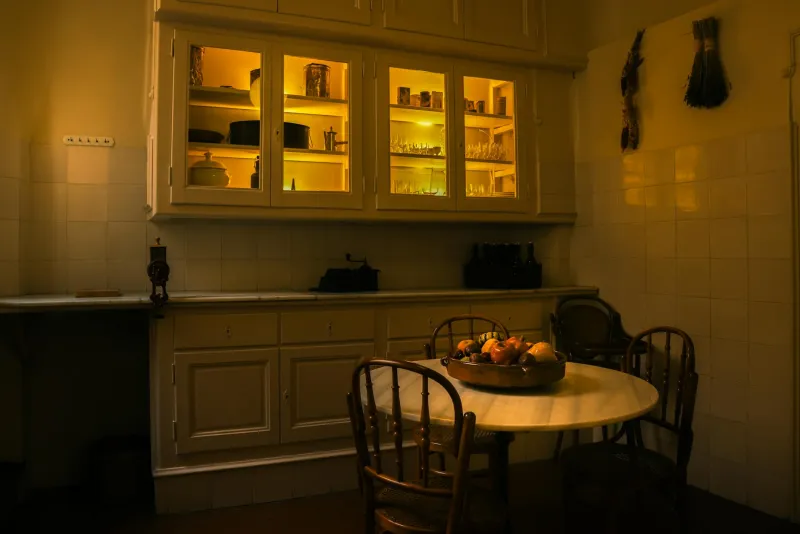
In the winter of 1889, if you needed money on New York's Lower East Side and the banks wouldn't touch you—which they wouldn't, if you were an immigrant, a woman, or simply too poor to matter—you climbed three flights of narrow stairs to a tenement apartment on Hester Street. There, around a kitchen table scarred by years of use, Maria Santos ran the most successful financial institution that never officially existed.
 Photo: New York, via i.ebayimg.com
 Photo: Lower East Side, via images.ctfassets.net
Santos couldn't vote, couldn't legally own property in her own name, and couldn't even testify in court without her husband's permission. But she could count, she could remember, and she understood something about trust that the marble-columned banks downtown had forgotten: money flows best between people who know each other's stories.
When Official Doors Stay Locked
Maria Santos arrived in New York in 1876 with her husband and three children, carrying the same dream as thousands of other Portuguese immigrants—a chance to build something better than what they'd left behind. What she found instead was a financial system designed to keep people like her on the outside.
Banks required property deeds as collateral, but immigrants couldn't buy property. They demanded employment verification, but most newcomers worked in cash jobs that left no paper trail. They wanted references from established customers, but how could you get references from institutions that wouldn't serve you in the first place?
For most immigrants, this meant living entirely in cash—vulnerable to theft, unable to save systematically, and locked out of the credit that might help them build businesses or buy homes. Santos watched her neighbors struggle with this impossible cycle and saw an opportunity disguised as a problem.
The Mathematics of Trust
Santos began small, lending five dollars here, ten dollars there, to neighbors she knew from church or the market. But her system was more sophisticated than simple charity. She kept meticulous records in a series of ledger books, noting not just amounts and due dates, but details about each borrower's family, work, and circumstances.
More importantly, she understood that credit wasn't just about money—it was about community knowledge. When Mrs. Rodriguez needed twenty dollars to buy fabric for the piecework that fed her family, Santos knew that Rodriguez's teenage daughter was already earning money as a seamstress. When Giuseppe Torrino wanted to borrow fifty dollars to buy a pushcart, Santos knew his brother had a successful fruit stand two blocks away.
This wasn't the impersonal risk assessment of downtown banks. This was intimate financial intelligence based on shared language, shared struggles, and shared hopes.
The Network Effect
By 1895, Santos's kitchen-table bank had evolved into something unprecedented: a neighborhood financial network that connected dozens of families in webs of mutual obligation and support. Borrowers became lenders. Lenders vouched for new borrowers. Success stories inspired others to take calculated risks.
The system worked because it was built on relationships that extended far beyond money. When Antonio Silva borrowed thirty dollars to open a small grocery store, he didn't just owe Santos the principal and interest—he owed his success to the community that had invested in him. His store became a gathering place where other borrowers could meet, plan, and support each other's ventures.
Santos had accidentally created what modern economists would recognize as a rotating credit association—a financial structure that would later be formalized in communities around the world. But in 1890s New York, it was simply what happened when people locked out of the official economy created their own.
Beyond the Kitchen Table
By the turn of the century, Santos's influence extended far beyond her tenement apartment. She had helped finance dozens of small businesses, enabled families to buy homes, and created a network of economic relationships that made the Lower East Side one of New York's most dynamic immigrant neighborhoods.
Her borrowers included the man who started the neighborhood's first Italian bakery, the woman who opened a boarding house that became a crucial stop for new arrivals, and the group of families who pooled resources to buy a small apartment building—becoming landlords instead of perpetual tenants.
More remarkably, Santos had created a system that was more stable than many official banks. Her default rate was virtually zero, not because she was a better judge of character than professional bankers, but because her loans were embedded in a community structure that made repayment a social obligation as much as a financial one.
The Invisible Revolution
Santos died in 1923, never having set foot inside a bank as a customer. Her ledger books were scattered among family members, her informal network gradually absorbed into the mainstream financial system as immigrants gained access to conventional credit. By the 1930s, most people had forgotten that the neighborhood's remarkable economic success had been built on handshake loans from a woman's kitchen table.
But the principles Santos pioneered—community-based lending, relationship-driven credit assessment, and financial structures that served people banks ignored—would resurface again and again throughout American history. From Depression-era credit unions to modern microfinance programs, her insights about trust-based banking have influenced institutions she never could have imagined.
The Legacy of Locked Doors
Maria Santos never intended to revolutionize finance. She simply wanted to help her neighbors survive and thrive in a system designed to exclude them. But her kitchen-table bank proved something that economists are still learning: the most innovative financial solutions often come from people who have no access to conventional financial institutions.
In a world where women couldn't own businesses and immigrants couldn't access credit, Santos created a parallel economy that served both. Her story reminds us that some of the most important economic innovations happen not in corporate boardrooms or government offices, but around kitchen tables where people who've been told "no" figure out how to say "yes" to each other.
The banks that refused to serve Maria Santos and her neighbors are mostly forgotten now. But the principles she developed—that credit flows best through community, that trust is the most valuable collateral, and that financial innovation often comes from the margins—continue to reshape how we think about money, lending, and economic opportunity.
Sometimes the most lasting institutions are the ones that never get officially recognized at all.