The Man Who Couldn't Hold a Job
Harland Sanders had tried just about everything by the time he hit middle age, and he'd failed at most of it. Law school? Dropped out after a classroom argument turned into a fistfight. Railroad work? Fired for insubordination. Insurance sales? Couldn't make the numbers work. Ferry boat operation? The business dried up when a bridge was built. Tire sales? Another dead end.
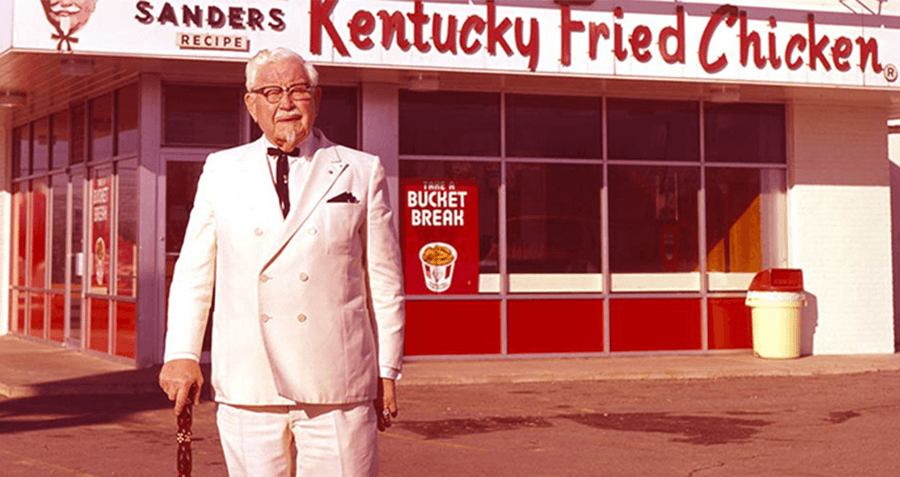 Photo: Harland Sanders, via allthatsinteresting.com
By his forties, Sanders was running a gas station in Corbin, Kentucky, serving meals to travelers from a table in the back of his service station. It wasn't glamorous work, but it was honest, and for the first time in his restless career, he'd found something he was genuinely good at: cooking fried chicken.
 Photo: Corbin, Kentucky, via www.cardcow.com
What made his chicken different wasn't just the blend of eleven herbs and spices that would later become legendary. It was his method. While other cooks were taking 35 minutes to fry chicken in a skillet, Sanders had figured out how to use a pressure cooker to cut that time to 15 minutes without sacrificing flavor or texture. In an age when Americans were increasingly eating on the go, speed mattered as much as taste.
When Success Turned to Ashes Overnight
For nearly two decades, Sanders built his reputation one plate at a time. Travelers would detour miles off their route just to eat at his Corbin restaurant. Kentucky's governor even made him an honorary colonel in recognition of his contributions to the state's cuisine. By the early 1950s, Sanders was running a 142-seat restaurant and had perfected not just his cooking method but his entire operation.
Then Interstate 75 came through.
The new highway bypassed Corbin entirely, cutting Sanders' customer traffic to almost nothing virtually overnight. At 65, with his life's work crumbling around him, most men would have accepted defeat and lived quietly on their Social Security checks. Sanders' monthly government payment was $105 – enough to survive, but barely.
Instead, he made a decision that seemed completely irrational: he would take his chicken recipe on the road.
The Rejection Tour That Changed Everything
Sanders loaded his white Cadillac with a pressure cooker, spice samples, and enough determination to power a small city. His plan was simple in concept but brutal in execution: he would drive from restaurant to restaurant, cook his chicken for the owners, and convince them to serve it in exchange for a nickel per piece sold.
The first restaurant owner said no. So did the second. And the third. And the next thousand.
For two years, Sanders crisscrossed America, sleeping in his car, cooking chicken in stranger's kitchens, and collecting rejections like some people collect stamps. Restaurant owners thought he was either crazy or a con artist. Who was this old man in a white suit claiming he could revolutionize their chicken sales?
The mathematics of his journey were staggering. Sanders would later claim he was rejected 1,009 times before getting his first yes. Whether that number was exact or rounded for effect, the broader truth was undeniable: he had endured more professional rejection in two years than most people face in a lifetime.
The Handshake That Built an Empire
Restaurant number 1,010 was in Salt Lake City, Utah. The owner, Pete Harman, agreed to try Sanders' chicken recipe for his customers. Within days, Harman's sales had increased so dramatically that he signed the first Kentucky Fried Chicken franchise agreement in 1952.
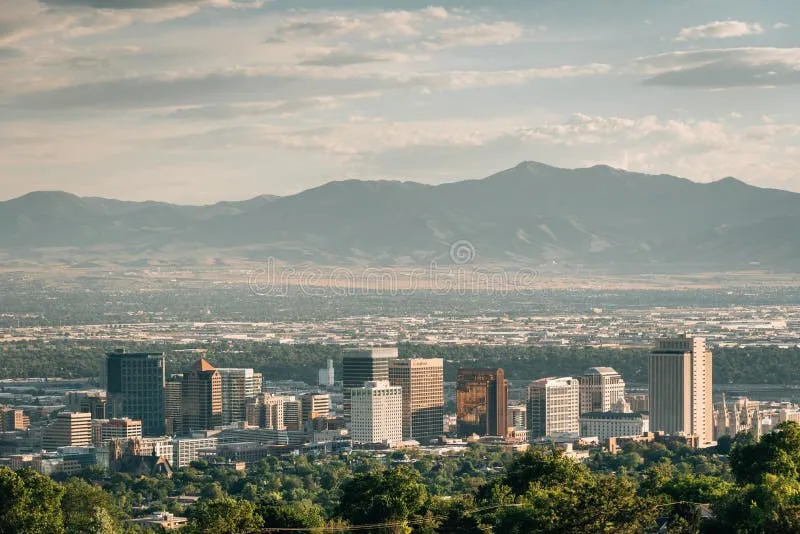 Photo: Salt Lake City, Utah, via thumbs.dreamstime.com
That handshake deal – which gave Sanders a nickel for every piece of chicken sold using his recipe and cooking method – became the template for one of the most successful franchise operations in business history. Sanders wasn't just selling chicken; he was selling a complete system that any restaurant owner could implement.
Within five years, Sanders had signed up more than 400 restaurants across the United States and Canada. His white suit and string tie became as recognizable as his chicken recipe. The man who couldn't hold a regular job had accidentally invented the modern restaurant franchise.
The Unlikely Legend of Never Giving Up
By 1964, Sanders had built Kentucky Fried Chicken into a network of more than 600 franchised outlets. When he sold the company to a group of investors for $2 million, he retained the rights to his image and recipe, ensuring that his face would remain on every bucket and his story would become part of American business folklore.
The Sanders story resonates because it violates every assumption about when success is supposed to happen. In a culture obsessed with young entrepreneurs and overnight sensations, here was a man who found his calling in what should have been his golden years. His greatest achievement wasn't just building a business; it was proving that failure isn't final and that the best chapters of a life can be written long after most people have stopped trying.
When Sanders died in 1980 at age 90, Kentucky Fried Chicken had become a global phenomenon with thousands of outlets worldwide. The gas station cook who refused to retire had created something that would outlast him by generations – all because he believed that 65 was young enough to start over, and stubborn enough to prove it 1,010 times in a row.