The Accident That Changed Everything
Marcus Whitfield was seven years old when the factory explosion took his sight forever. The year was 1923, and his father worked at a munitions plant outside Boston that had been hastily converted from wartime production. What should have been a routine Saturday visit turned into a tragedy that would reshape not just one boy's life, but eventually the entire American art authentication industry.
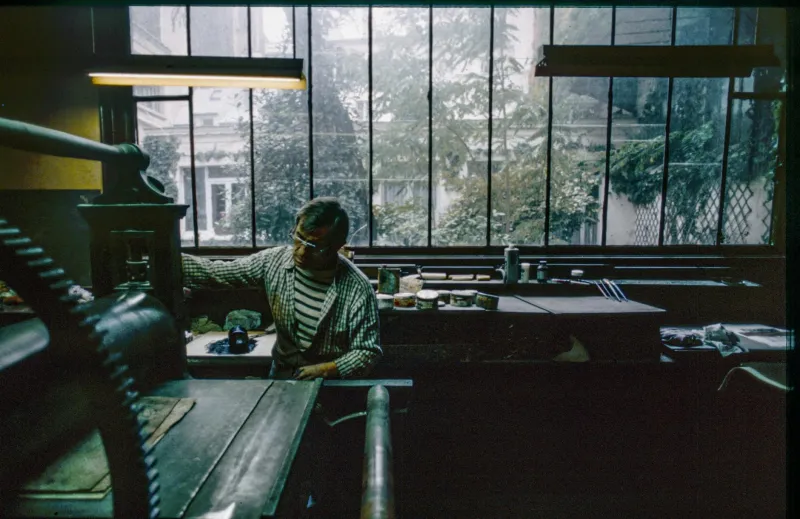
 Photo: Marcus Whitfield, via yt3.googleusercontent.com
While other children his age were learning to read with their eyes, Marcus was forced to develop an entirely different relationship with the world around him. His fingers became his primary tools for understanding texture, weight, and the subtle imperfections that make each object unique.
The Unexpected Education
By his teenage years, Marcus had developed what his family called "impossible memory." He could identify the make and model of a car by running his hands along its hood, distinguish between different types of wood by touch alone, and even detect when someone was lying by the subtle changes in their breathing patterns.
His art education began by accident. In 1940, while working as a telephone operator to support his widowed mother, Marcus was asked to help move some paintings from the estate of a deceased Boston Brahmin family. The moment his fingers touched the canvas of what the family believed was a minor 18th-century portrait, he knew something was wrong.
"This isn't old," he told the estate lawyer. "The paint is too thick in some places, too thin in others. And there's a roughness underneath that feels like sandpaper, not canvas."
The painting was later revealed to be a 1920s forgery worth perhaps $50, not the $5,000 the family had expected.
Building Trust Through Touch
Word of Marcus's unusual abilities spread quietly through Boston's tight-knit art community. Gallery owners began calling him to authenticate pieces before major purchases. Insurance companies sought his opinion on claims involving damaged artwork. What started as occasional consultation work soon became a full-time occupation.
In 1947, Marcus rented a single room above a bookstore in Boston's Back Bay and officially opened Whitfield Authentication Services. His methods were unorthodox but undeniably effective. While other experts relied primarily on visual analysis, Marcus developed a comprehensive system based on touch, smell, and sound.
He could detect the age of varnish by its scent, identify different periods of an artist's work by the pressure variations in their brushstrokes, and even determine if a painting had been stored in a damp basement by the subtle warping patterns in the canvas.
The Bidding Revolution
Perhaps Marcus's most valuable skill wasn't authentication at all—it was reading people. During auction previews, he would position himself near potential bidders, listening to their conversations and cataloguing their interests. At the actual auctions, his acute hearing allowed him to detect the subtle hesitations, sharp intakes of breath, and nervous movements that indicated when someone was reaching their bidding limit.
Auction houses began hiring him not just as an authenticator, but as a strategic advisor. His presence at an auction became a selling point itself—if Marcus Whitfield had authenticated a piece, buyers knew they could bid with confidence.
The Empire Expands
By the 1960s, Whitfield Authentication had grown from that single room to a five-story building employing dozens of experts. Marcus had trained a new generation of appraisers to incorporate tactile analysis into their work, though none matched his extraordinary abilities.
His client list read like a who's who of American wealth: the Rockefellers, the Mellons, major museums from coast to coast. When the Metropolitan Museum of Art needed to verify the authenticity of a recently donated Monet, they called Marcus. When a California tech entrepreneur wanted to ensure his $50 million art collection was legitimate, the first call went to Boston.
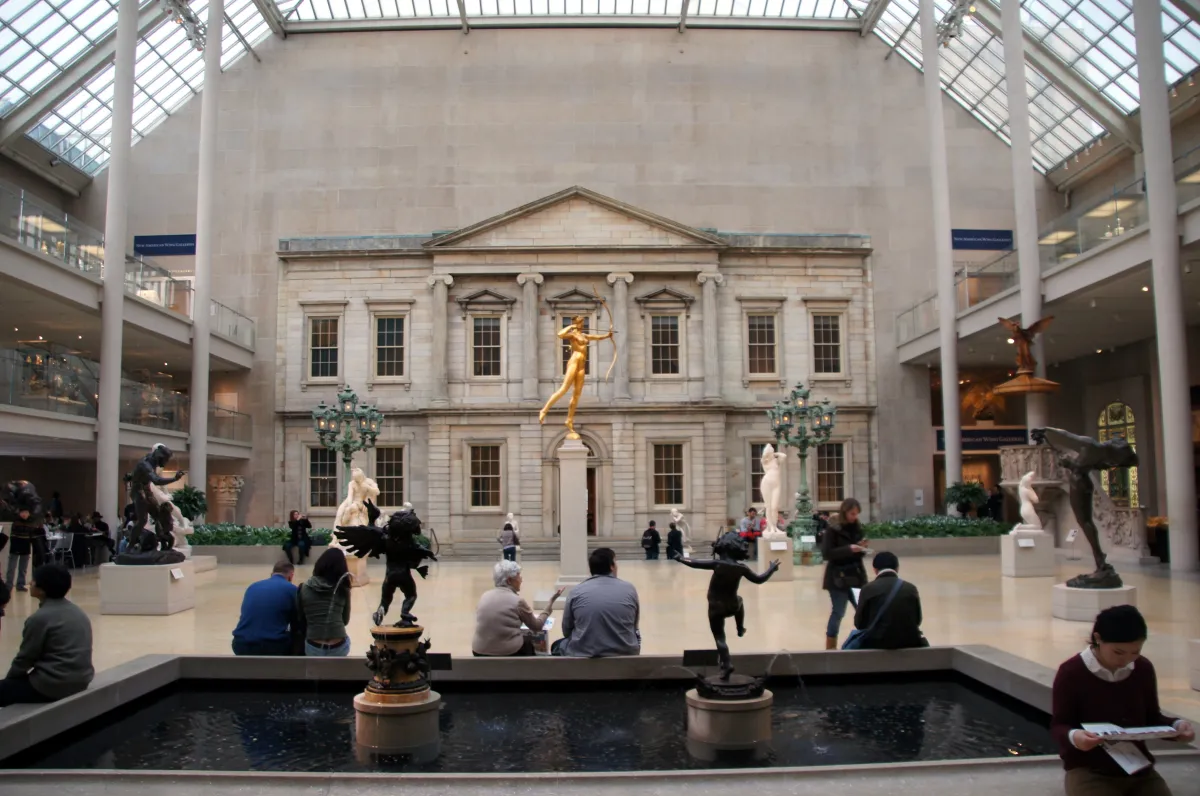 Photo: Metropolitan Museum of Art, via www.visionsoftravel.org
The Science Behind the Skill
Modern neuroscience helps explain what Marcus accomplished through intuition and necessity. When the brain loses one major sense, it often compensates by dramatically enhancing others. Marcus's fingertips developed sensitivity levels that allowed him to detect differences in paint texture measured in microns—variations invisible to even the most trained eye.
His memory palace, built through decades of necessity, could store and recall thousands of tactile signatures. He knew how Picasso's brushwork felt different during his Blue Period versus his Rose Period. He could distinguish between genuine Van Gogh impasto and the careful imitations that fooled visual experts.
Legacy of Innovation
When Marcus Whitfield died in 1987, his authentication firm was valued at over $40 million. More importantly, his methods had fundamentally changed how the art world approached authentication. Major auction houses now routinely incorporate tactile analysis into their verification processes.
The Whitfield Institute, established with his estate, continues to train authenticators in multi-sensory analysis techniques. Museums worldwide use protocols he developed for handling and evaluating artwork without relying solely on visual inspection.
The Outsider's Advantage
Marcus Whitfield's story illustrates a profound truth about innovation: sometimes the greatest breakthroughs come from those forced to see the world differently. His blindness wasn't just an obstacle to overcome—it became the foundation of an entirely new approach to understanding and valuing art.
In an industry built on visual beauty, the man who couldn't see became the most trusted authority on what was real and what was fake. His success reminds us that perceived limitations often mask extraordinary potential, waiting for the right circumstances to reveal themselves.