Honey, Handshakes, and the Franchise Formula: The Appalachian Beekeeper Who Invented Modern Business Without Knowing It
The Mountain Laboratory
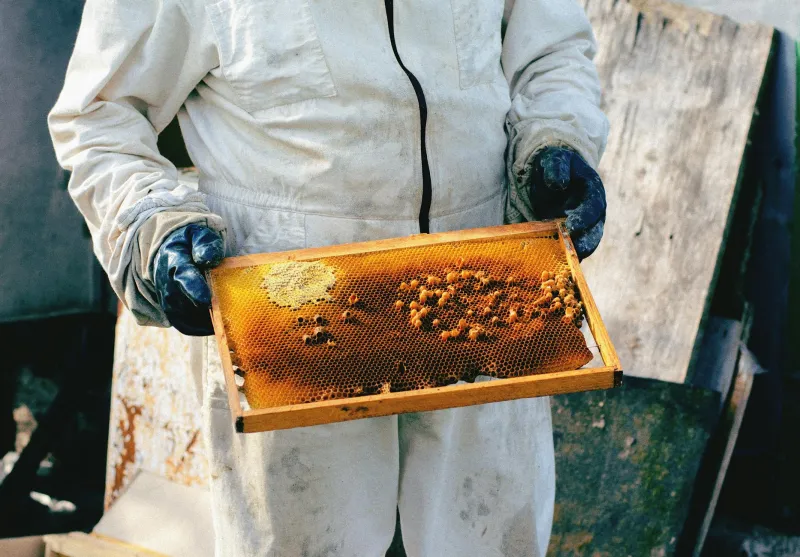
In 1923, Ruby Mae Hutchinson owned forty-seven beehives scattered across the hollers of Pocahontas County, West Virginia, and a problem that would accidentally reshape American business.
 Photo: Pocahontas County, West Virginia, via pocahontascountywv.com
Her honey was extraordinary—wildflower varieties that tasted like the mountain air itself, each batch subtly different depending on the season and the particular meadows her bees had visited. Word spread through the coal camps and logging towns, but Ruby Mae could only produce so much from her small operation.
The solution she devised would later be studied in Harvard Business School case studies, though she never knew it. Ruby Mae was about to invent franchising, forty years before Ray Kroc supposedly did.
 Photo: Harvard Business School, via philip.greenspun.com
The Handshake Network
Ruby Mae's innovation started with her neighbor, Ezra Caldwell, who lived two ridges over and had been buying her honey for his family's general store. "Ezra came to me with a proposition," she recalled in a 1978 interview with the Charleston Gazette. "He wanted to know if I'd teach him the beekeeping, and he'd give me a cut of what he sold."
Instead of simply selling Ezra honey to resell, Ruby Mae did something unprecedented. She taught him her methods—not just beekeeping, but her entire system: how to identify the best wildflower locations, how to time the harvest for peak flavor, how to process and package the honey for maximum shelf life, even how to talk to customers about the different varieties.
In return, Ezra would pay her twenty percent of his gross sales and agree to maintain her quality standards. If his honey didn't meet her specifications, the partnership would end.
It was the first franchise agreement in American history, sealed with a handshake on a mountain porch.
The Accidental Empire
Word of the arrangement spread through the mountain communities. Soon, Ruby Mae had similar partnerships with twelve other families across three counties. Each operator learned her methods, used her techniques, and paid her a percentage of their sales.
But Ruby Mae went further than simple licensing. She created what modern business calls "operational support systems"—regular visits to each location, seasonal training sessions, and a network where successful operators shared techniques with struggling ones.
"She had this way of making everyone feel like they were part of something bigger," remembered Clara Vance, whose grandmother operated one of Ruby Mae's partner apiaries. "Every month, she'd visit all the operations, see how folks were doing, share what was working at other places."
By 1935, the "Hutchinson Honey Network" included forty-three independent operators across five states, each following Ruby Mae's protocols while adapting to their local conditions.
The Principles That Preceded the Professors
Modern franchise consultants charge thousands of dollars to teach principles that Ruby Mae figured out through necessity and mountain wisdom:
Standardized Operations: Every Hutchinson operator followed the same basic procedures, ensuring consistent quality across all locations.
Territorial Rights: Ruby Mae granted exclusive geographic areas to each partner, preventing internal competition and ensuring each operator could build a sustainable local business.
Ongoing Training and Support: Regular visits, seasonal workshops, and a informal mentorship network kept quality high and innovation flowing.
Revenue Sharing: The twenty percent fee created aligned incentives—Ruby Mae succeeded only when her partners succeeded.
Quality Control: Clear standards and the threat of termination maintained brand integrity across the network.
Scalable Growth Model: New operators learned from existing ones, creating a self-sustaining expansion system.
"She was doing everything that modern franchising does, just without the lawyers and the corporate structure," explains Dr. Michael Brennan, who studies franchise history at Georgetown University. "Her system was actually more elegant than many modern approaches because it was built on trust and mutual benefit rather than legal contracts."
The Innovation Hidden in Plain Sight
What makes Ruby Mae's story remarkable isn't just that she invented franchising decades early—it's that she did it better than many who came after.
Her network survived the Great Depression when many businesses failed. During World War II, when sugar rationing made honey a precious commodity, Hutchinson operators thrived while maintaining quality and fair pricing. The system was so successful that by 1945, "Hutchinson Honey" was sold in stores from Pittsburgh to Atlanta.
Yet business historians largely overlooked her contributions. When academics began studying franchise models in the 1950s and 1960s, they focused on urban restaurant chains and retail operations. A mountain woman's honey network didn't fit their models of modern business innovation.
The Ripple Effect
Ruby Mae's influence extended far beyond honey. Several of her operators went on to create their own networks in different industries, carrying her principles into furniture making, quilting cooperatives, and even early automotive repair chains.
"My grandfather learned business from Ruby Mae," says Tom Caldwell, Ezra's grandson, who now runs a successful chain of outdoor gear stores across Appalachia. "The way she treated people, the way she built partnerships—that became the foundation for everything our family did in business."
The Hutchinson model influenced early franchise pioneers who encountered it in the region. Howard Johnson's, one of the first major restaurant franchisors, reportedly studied Ruby Mae's methods when expanding into West Virginia in the 1940s.
Lessons from the Mountains
Ruby Mae's approach offers insights that modern franchise systems often miss:
Trust over Contracts: Her handshake agreements created stronger partnerships than many legal documents because they required ongoing mutual satisfaction rather than compliance with fixed terms.
Local Adaptation: While maintaining core standards, she encouraged operators to adapt to local conditions and customer preferences—a flexibility that many modern franchises struggle to achieve.
Community Integration: Her network strengthened local communities rather than extracting value from them, creating sustainable long-term relationships.
Organic Growth: Expansion happened naturally through word-of-mouth and demonstrated success rather than aggressive corporate recruitment.
The Mountain Legacy
Ruby Mae Hutchinson died in 1967, but her honey network continued operating until the late 1970s, when industrial agriculture and changing consumer habits finally overwhelmed the small-scale model.
By then, franchising had become a cornerstone of American business, generating billions in revenue and creating thousands of standardized operations across every industry imaginable. But few of these modern franchises matched the sustainability, community integration, and mutual prosperity that Ruby Mae had achieved with forty-seven beehives and a handshake.
Today, business schools teach case studies about Ruby Mae's methods, though they often don't know her name. Her principles live on in successful franchise operations worldwide—proof that sometimes the most profound innovations come not from corporate boardrooms, but from mountain porches where practical wisdom meets human decency.
In an age of complex legal frameworks and corporate structures, Ruby Mae's story reminds us that the best business solutions often come from the simplest human insights: treat people fairly, maintain quality, share success, and build something bigger than yourself.