Sacred Foundations: Five Corporate Giants That Started With a Prayer and a Borrowed Key
The Sanctuary Startup
Most business schools teach students to think big from day one — rent impressive offices, invest in premium equipment, project success before you've earned it. But some of America's most enduring companies were born in spaces where thinking small was a virtue, where community mattered more than capital, and where the only overhead was a monthly donation to the building fund.
Church basements across America have quietly incubated more billion-dollar businesses than most venture capital firms. Here are five companies that prove sometimes the most sacred space for entrepreneurship isn't a garage or a dorm room — it's a basement where the coffee is always on and someone's grandmother is probably making sure you eat something.
1. Chick-fil-A: The Chicken Sandwich That Started With Sunday School
The Basement: Hapeville Baptist Church, Hapeville, Georgia
The Year: 1946
The Vision: Better chicken, served with genuine care
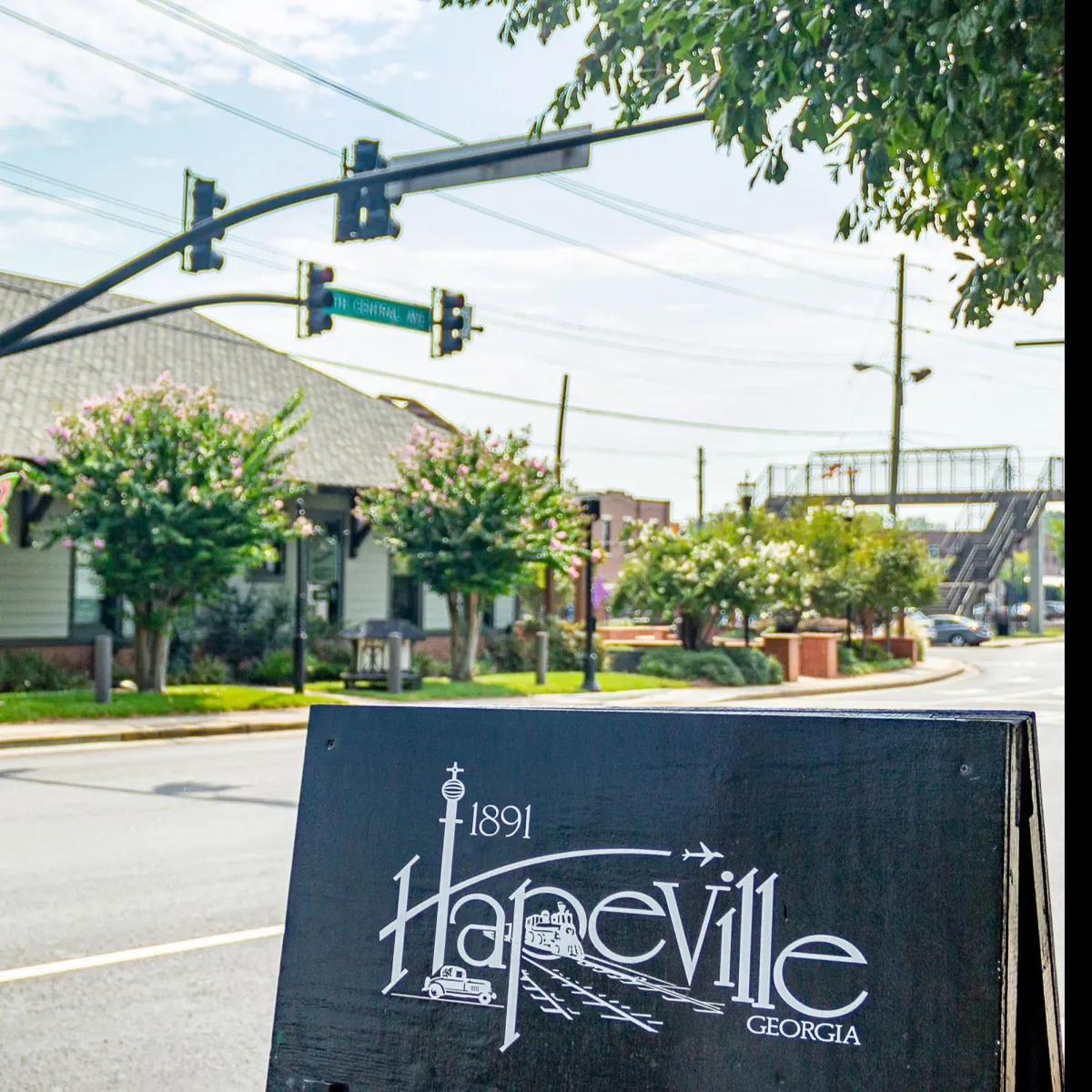 Photo: Hapeville Baptist Church, via hapeville.org
Truett Cathy wasn't trying to build a fast-food empire when he started experimenting with chicken recipes in the basement kitchen of his local Baptist church. He was just trying to perfect a dish for the church's Wednesday night dinners.
The 25-year-old restaurant owner had been struggling to make his small diner profitable when the church's food service coordinator asked if he could help improve their weekly meals. Cathy saw an opportunity to test new recipes on a forgiving audience who would give him honest feedback.
"The church basement was perfect," Cathy later recalled. "I had access to a real commercial kitchen, a built-in focus group of 200 people, and if something didn't work, they'd tell me exactly how to fix it."
The breakthrough came when Cathy decided to pressure-cook chicken breast instead of frying it whole. The basement's ancient pressure cooker, donated by a church member decades earlier, cooked the meat faster and kept it more tender than traditional methods.
By 1947, Cathy's "church chicken" had become so popular that members were asking him to cater their family gatherings. He realized he had stumbled onto something bigger than Wednesday night dinners.
The community-first philosophy that Cathy developed in that church basement became the foundation of Chick-fil-A's corporate culture. The company's famous Sunday closure policy? That came directly from Cathy's belief that employees deserved time for worship and family — a principle he learned while serving meals alongside church volunteers who gave their time freely.
Today, Chick-fil-A generates over $11 billion in annual revenue and operates more than 2,600 locations. But the company still sponsors church dinners and community events, staying true to its basement beginnings.
2. ServiceNow: The Tech Giant That Grew From Youth Group
The Basement: First Presbyterian Church, San Diego, California
The Year: 2004
The Vision: Making technology work for people, not against them
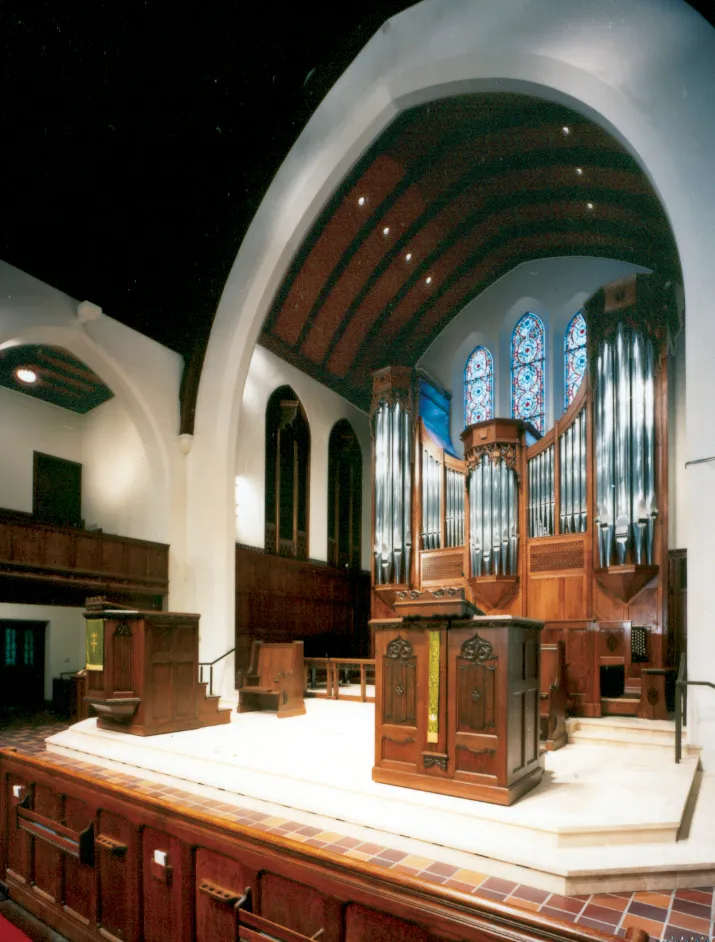 Photo: First Presbyterian Church, via kccobuilders.com
Fred Luddy was a 44-year-old software consultant with a radical idea: enterprise software should be as easy to use as a video game. The problem was, he had no money to build it, no office to work from, and no team to help him.
What he did have was a key to the basement of First Presbyterian Church, where he had been volunteering as a youth group leader for three years.
"The kids would leave at 8 PM, and I'd stay until midnight working on code," Luddy explains. "The church had Wi-Fi, folding tables, and all the coffee I could drink. Plus, if I got stuck on a problem, I could literally pray about it."
Luddy spent eighteen months in that basement, building the first version of what would become ServiceNow's signature product: a platform that makes complex IT systems simple to manage. He tested his software on the church's own computer network, using their help desk requests as real-world data.
The church connection proved crucial when Luddy needed his first customers. Several congregation members were IT managers at local companies, and they agreed to pilot his software. Their feedback helped him refine the product and build case studies that would later attract venture capital funding.
"Working in that basement taught me that good software should serve people the way a church serves its community," Luddy says. "It should make life easier, not more complicated."
ServiceNow went public in 2012 and is now valued at over $100 billion. The company still maintains a strong focus on community service and has donated millions to educational and nonprofit organizations.
Luddy credits his church basement origins with keeping him grounded during the company's explosive growth. "When you've built a billion-dollar company on folding tables next to a Sunday school classroom, you never forget that success is about serving others."
3. Spanx: The Undergarment Empire Born in Bible Study
The Basement: Buckhead Baptist Church, Atlanta, Georgia
The Year: 1998
The Vision: Making women feel confident and comfortable
Sara Blakely was selling fax machines door-to-door when she had her billion-dollar idea. She needed pantyhose that didn't have feet, but no manufacturer made them. So she decided to make them herself.
The problem was, Blakely knew nothing about fashion, manufacturing, or business. But she did know about persistence, having spent two years attending a weekly Bible study in the basement of Buckhead Baptist Church.
"Those Wednesday night sessions taught me that big changes start with small steps," Blakely explains. "I learned to break down overwhelming problems into manageable pieces."
Blakely used the church basement as her informal headquarters during Spanx's early days. After Bible study ended, she would stay behind to research manufacturers, practice her sales pitch, and prototype new designs using the church's copy machine and meeting rooms.
The church community became her first focus group. Blakely would bring samples to Bible study and ask the other women for honest feedback. Their suggestions helped her refine everything from sizing to packaging.
"Church ladies don't lie about how things fit," Blakely laughs. "They gave me feedback that was more valuable than any market research firm."
The breakthrough came when Blakely convinced a hosiery manufacturer in North Carolina to produce her first order of 5,000 units. She stored the inventory in the church basement until she could afford a warehouse.
Spanx is now worth over $1 billion, and Blakely has become one of the world's youngest self-made female billionaires. But she still attends the same Bible study and credits the church community with keeping her grounded.
"Success is great, but community is everything," she says. "I learned that in a church basement, and I've never forgotten it."
4. Papa John's: The Pizza Chain That Rose From Prayer Meetings
The Basement: St. Agnes Catholic Church, Louisville, Kentucky
The Year: 1983
The Vision: Better ingredients, better pizza
John Schnatter was a 22-year-old college student with a pizza recipe and a dream when he approached the pastor at St. Agnes Catholic Church with an unusual request: could he use the basement kitchen to cater the church's monthly fellowship dinners?
The pastor agreed, and Schnatter began serving his homemade pizza to congregation members after Sunday evening services. The basement kitchen was basic — just a few ovens, some prep space, and a walk-in cooler — but it was enough for Schnatter to test his recipes and build a following.
"The church crowd was the perfect test market," Schnatter recalls. "They were honest about what they liked, loyal if you treated them well, and they told their friends about good food."
Schnatter spent six months perfecting his pizza in that basement, learning how to manage inventory, control costs, and deliver consistent quality. The church members became his unofficial advisory board, offering suggestions on everything from sauce recipes to business strategy.
When Schnatter was ready to open his first commercial location, several church members became his initial investors, providing the $1,600 he needed to buy equipment and lease a small storefront.
"They believed in me before I believed in myself," Schnatter says. "That kind of support is priceless."
Papa John's grew into a global chain with over 5,000 locations and billions in annual revenue. The company's emphasis on quality ingredients and community involvement traces back to those early days in the church basement, where Schnatter learned that building a business was really about building relationships.
5. The Home Depot: The Hardware Giant That Hammered Out Success in Sunday School
The Basement: Temple Kol Ami, West Orange, New Jersey
The Year: 1978
The Vision: Empowering people to improve their homes themselves
Bernie Marcus and Arthur Blank had just been fired from their executive positions at a hardware chain when they retreated to the basement of Temple Kol Ami to figure out their next move. Marcus, a longtime member of the congregation, had been given permission to use the basement meeting rooms for "business planning sessions."
"We had no office, no money, and no clear plan," Blank remembers. "But we had a basement, some folding chairs, and the determination to prove our former employer wrong."
The partners spent three months in that basement, developing the concept that would become The Home Depot. They interviewed contractors, surveyed homeowners, and refined their vision of a warehouse-style store that would make home improvement accessible to everyone.
The church basement setting influenced their approach in unexpected ways. The community-oriented environment reminded them that their business should be about serving people, not just selling products.
"In that basement, surrounded by Sunday school drawings and fellowship announcements, we realized we weren't just creating a store," Marcus explains. "We were building a place where people could learn, grow, and take pride in their homes."
The Home Depot went public in 1981 and grew into the world's largest home improvement retailer, with over 2,300 stores and $150 billion in annual revenue. The company's famous customer service training and community involvement programs trace back to the values Marcus and Blank developed during their basement brainstorming sessions.
The Sacred Economics of Starting Small
What these five stories share isn't just humble beginnings — it's a recognition that the constraints of starting in a church basement actually create advantages that traditional startup environments can't replicate.
Church basements force entrepreneurs to focus on essentials, build genuine relationships, and remember that business success should serve a larger purpose. They provide built-in communities for testing ideas, receiving honest feedback, and finding initial customers who become long-term advocates.
Most importantly, they remind founders that the goal isn't just to build a company — it's to build something that makes the world a little bit better.
"There's something powerful about starting where people come to hope for better things," reflects Truett Cathy's son, Dan Cathy, current CEO of Chick-fil-A. "It sets the tone for everything that comes after."
In an era of million-dollar startup accelerators and billion-dollar venture funds, these basement beginnings prove that sometimes the most valuable resources are the ones that can't be purchased: community, authenticity, and the humility that comes from starting with a prayer and a borrowed key.