The Waiting Room Breakthrough: Six Fortunes That Started Before Anyone Said Yes
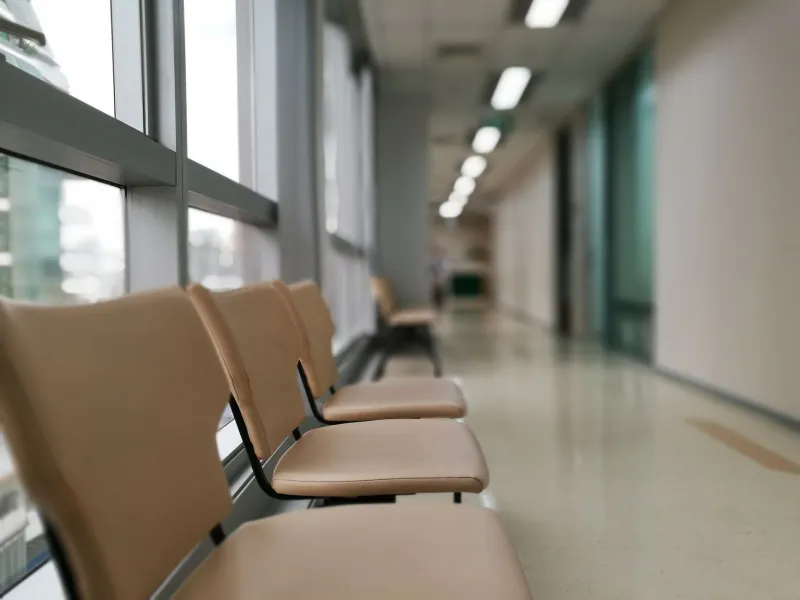
They weren't in garages. They weren't in dorm rooms or coffee shops or co-working spaces. Six of America's most enduring business success stories were conceived in the most uncomfortable real estate imaginable — waiting rooms where someone was about to say no. Turns out, forced stillness might be the most underrated incubator in the country.
The American mythology of entrepreneurship has a pretty fixed set of origin locations. The garage. The dorm room. The back of a napkin at a restaurant. What that mythology tends to skip is the unglamorous hours before the breakthrough — the waiting, the not-knowing, the sitting in a plastic chair under fluorescent lights with nothing to do but think.
These six stories suggest we've been overlooking the most honest incubator in American business history.
1. The Bank Lobby That Launched a Cleaning Empire
In 1962, a woman named Cecelia Drummond sat in the lobby of a Memphis bank for two and a half hours waiting for a loan officer who, she already suspected, was never going to approve her application.
Cecelia wanted to expand her small domestic cleaning service. The bank wanted collateral she didn't have. While she waited, she did what she always did when she was nervous: she cleaned. Not literally — she straightened the magazines, repositioned a wastebasket that was sitting at an angle, noticed a streak on the window near the receptionist's desk and felt an almost physical discomfort at leaving it there.
And then she thought: nobody is servicing commercial spaces the way she serviced homes. Not with the same attention. Not with the same systems.
The loan officer said no. Cecelia walked out of that bank with a business plan for a commercial cleaning operation that, within a decade, had contracts with office buildings, hospitals, and municipal facilities across three states. She funded the launch by pooling resources with four other women from her church. The bank eventually became one of her clients.
2. The Unemployment Office and the Catalog That Changed Rural Retail
When Harold Fitch lost his job at a printing company in rural Nebraska in 1948, he spent three consecutive Tuesdays in the same wooden chair at the state unemployment office, watching the same thing happen over and over: farmers and their wives driving thirty or forty miles into town, waiting for services, and leaving frustrated because the thing they'd driven for wasn't available or was priced beyond reach.
Harold had spent fifteen years in printing. He understood catalogs. He understood distribution. Sitting in that waiting room, watching the same gap repeat itself week after week, he sketched the rough structure of a regional mail-order operation built specifically for rural households — a catalog that would come to the customer instead of making the customer come to it.
His unemployment benefits ran out before he got the first catalog printed. He borrowed money from his mother-in-law, printed three thousand copies, and mailed them himself. Within two years, he had a warehouse. Within five, he had two.
3. The Hospital Waiting Room Where a Medical Billing Revolution Was Born
Patricia Osei was sitting in a hospital waiting room in Atlanta in 1977, watching her mother navigate a billing dispute with an administrator across a counter, when she had the thought that would define the next thirty years of her life: this process is designed to defeat the patient.
Patricia was a bookkeeper. She understood systems. What she was watching was a system so deliberately complex that most people simply gave up and paid whatever they were told to pay — often amounts that were wrong, inflated, or applied to services that insurance should have covered.
She spent the next six months learning medical billing codes on her own time, working evenings after her day job. Then she started offering a single service: she would audit a patient's hospital bill and identify errors in exchange for a percentage of whatever she recovered.
The errors, it turned out, were everywhere. Her first ten clients collectively recovered more than forty thousand dollars in overbillings. Word spread through Atlanta's Black professional community first, then beyond it. By 1985, Patricia ran a firm with twelve employees and a client list that included not just individuals but small businesses and municipal employers managing health benefits for hundreds of workers.
4. The Immigration Center and the Translation App Before Anyone Had a Smartphone
Marco Delgado arrived at a federal immigration processing center in Los Angeles in 1989 speaking almost no English. He spent four days in various waiting rooms, watching people — many of them educated, skilled, and completely capable — reduced to helplessness by a language barrier that nobody around them seemed equipped or particularly motivated to address.
 Photo: Los Angeles, via wallpapers.com
Marco was an electrical engineer from Guadalajara. He had also, before leaving Mexico, spent two years developing simple software tools for a regional telecommunications company. In those waiting rooms, with nothing but time and a legal pad he'd bought at a corner store, he began designing what he described to his wife as "a bridge" — a software system that could facilitate real-time translation in bureaucratic and legal settings.
The technology to build what he imagined wouldn't fully exist for another decade. But the design framework he sketched in that immigration waiting room became the foundation for a language-services company he launched in 1997, right as the internet made his original vision suddenly viable. The company was eventually acquired in 2011 for a figure his former immigration case worker, who had heard about it on the news, later described as "almost too much to believe."
5. The IRS Office Waiting Room and the Tax Software That Ate an Industry
In 1971, an accountant named Robert Sully sat for three hours in an IRS district office in Cincinnati waiting to resolve a client dispute that turned out to be based on a clerical error so simple it took four minutes to fix once someone actually looked at it.
Those three hours, Robert later said, were the most clarifying of his professional life.
What he watched, over and over, was the same fundamental problem: ordinary Americans were terrified of a system they didn't understand, and the system was making no effort whatsoever to be understood. The forms were designed by people who would never have to fill them out. The process was organized around institutional convenience, not human comprehension.
Robert spent the next four years building a simplified tax preparation system — first as a paper-based guide, then, as computing became accessible in the late 1970s, as software. His instinct, formed entirely in that waiting room, was that the product didn't need to be smarter than the IRS. It just needed to be friendlier than the IRS. That turned out to be an extraordinarily low bar to clear, and an extraordinarily profitable one.
6. The Social Security Office and the Senior Delivery Business Nobody Saw Coming
Eleanor Vance was sixty-three years old in 1983 when she sat in a Social Security Administration office in rural Tennessee for most of a Wednesday afternoon, surrounded by elderly people who had no transportation, no one to help them navigate the paperwork, and no real expectation that the afternoon was going to go well for them.
Eleanor had recently retired from nursing. She had a car, organizational instincts honed over thirty years of hospital logistics, and an apparently bottomless supply of energy that retirement had left with nowhere to go.
The business she designed in that waiting room was almost insultingly simple: she would drive elderly clients to appointments, help them manage paperwork, and coordinate the kind of practical daily logistics that were becoming overwhelming for people living alone without family nearby. She charged a flat weekly fee, kept her costs minimal, and within a year had more clients than she could personally serve.
She trained two women from her church to help her. Then four more. By the time Eleanor retired for the second time in 1998, her operation — which she had always refused to call anything grander than "a helping service" — employed thirty-one people across four counties and had been cited by state health officials as a model for community-based elder care.
What the Waiting Room Actually Does
There's a pattern running through every one of these stories that's easy to miss if you're focused on the business details. In each case, the waiting room didn't just provide time. It provided perspective. It forced the person sitting in that plastic chair to stop performing and start observing — to watch a system operate on the people around them and ask the question that all great businesses ultimately answer: why is this so much harder than it needs to be?
The garages and dorm rooms of entrepreneurship mythology are about building in private. The waiting room is about watching in public. And sometimes, the watching is where the real work happens.