Eight Seconds to Eight Figures: The Rodeo Clown Who Terrified Wall Street
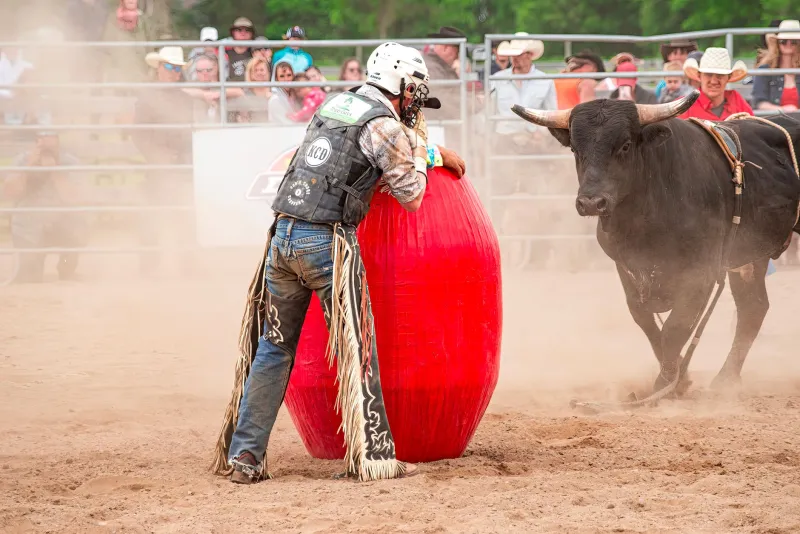
The first thing you notice about Cody Harlan in any photograph from his rodeo years is the paint. White greasepaint, exaggerated red lips, a battered hat pulled sideways — the full costume of a man whose job description could be summarized in three words: distract the bull. The second thing you notice is his eyes. Even behind the makeup, they are absolutely locked in. Scanning. Calculating. Alive to every variable in the arena.
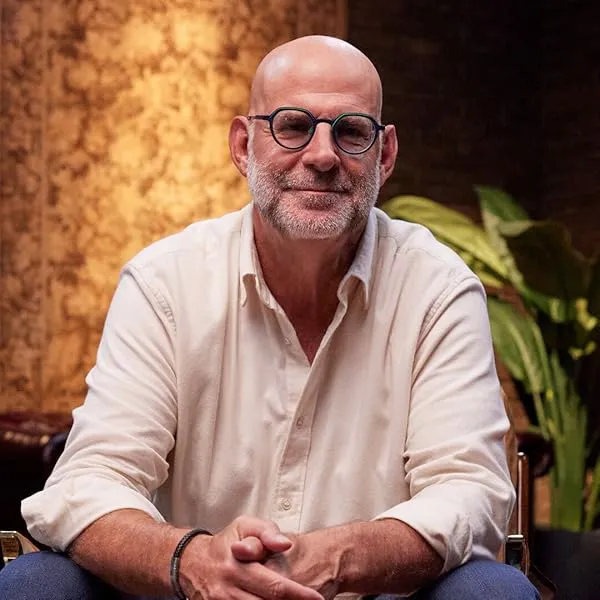 Photo: Cody Harlan, via m.media-amazon.com
Those same eyes, minus the greasepaint, would eventually make Cody Harlan one of the most respected and quietly feared derivatives traders in the country. But the road from dusty Texas arenas to a glass-walled office in lower Manhattan was anything but straight — and that's precisely what made it work.
Born Into the Dust
Cody grew up outside Abilene, Texas, in a world where rodeo wasn't entertainment — it was economy. His father worked livestock, his uncles competed on the regional circuit, and by the time Cody was fourteen, he was already helping set up barrels at weekend events. He never had any particular talent for riding. What he had, almost from the beginning, was an unusual ability to read animals and crowds simultaneously.
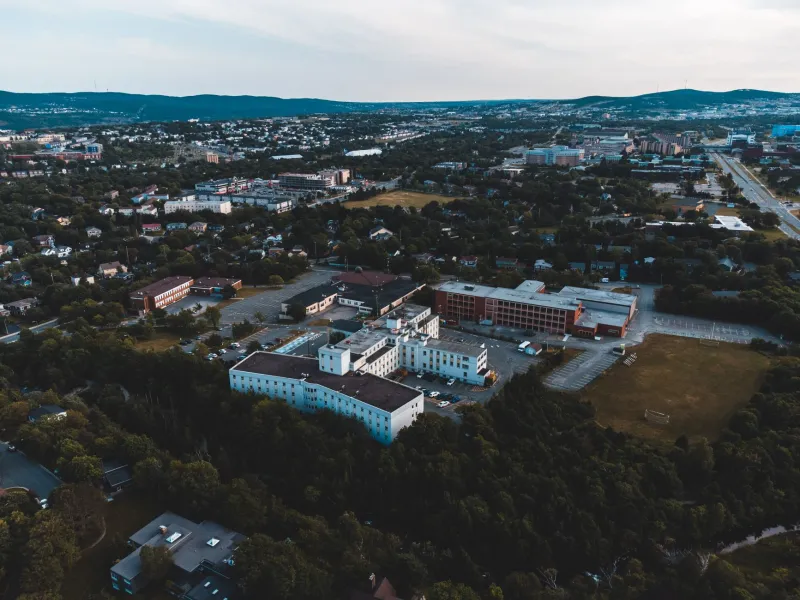
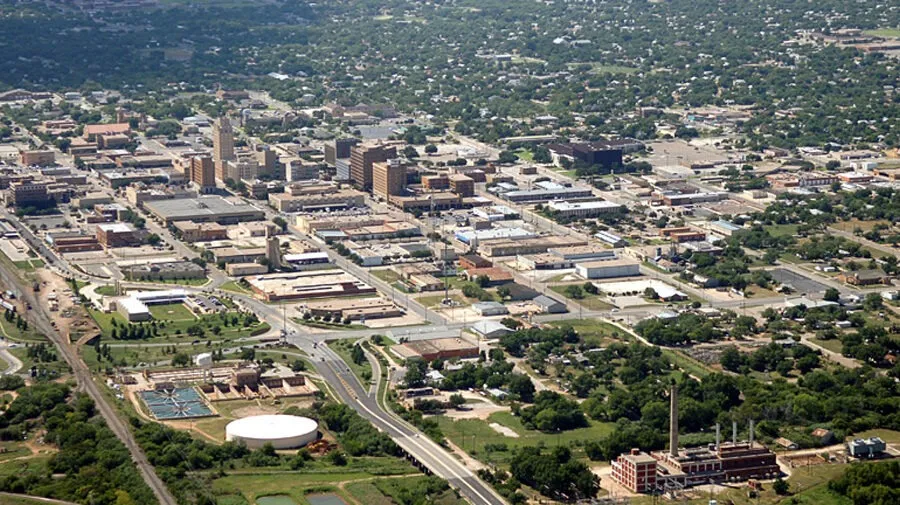 Photo: Abilene, Texas, via community.solutions
He became a rodeo clown at nineteen, almost by accident, stepping in for an injured performer at a small event in Sweetwater. He was terrible at the jokes. He was extraordinary at the job itself — the actual life-or-death choreography of redirecting a furious animal away from a fallen rider while keeping the audience calm enough not to stampede.
For the next eleven years, he worked the circuit. Small rodeos, big rodeos, the occasional televised event. He got gored twice, broke his collarbone once, and dislocated his shoulder more times than he could accurately count. He also got very, very good at something that has no official name but that traders would later call adversarial pattern recognition — the ability to process chaotic, rapidly changing information and make high-confidence decisions in fractions of a second.
The Classroom Nobody Talks About
Ask any serious rodeo clown what the job actually requires and you'll get an education in applied psychology. You're not just watching the bull. You're watching the rider's body language before the chute even opens. You're reading the crowd to anticipate which direction panic might flow. You're tracking the other clowns, the gatemen, the pickup riders — building a real-time mental model of a system with dozens of moving parts, any one of which could turn lethal without warning.
Cody has described it this way in interviews: "Every ride is a derivatives contract. You're not betting on one outcome. You're pricing in every possible outcome, assigning rough probabilities, and positioning yourself so that none of the bad ones kill you."
He didn't know that's what he was doing at the time. He was just trying not to get killed.
The transition to finance began with a knee injury at thirty-one that ended his performing career. Flat broke, living in a cousin's spare room in Fort Worth, he enrolled in a community college business program mostly because it was cheap and the classroom had air conditioning. His first finance professor — a retired options trader named Gerald Moss — stopped him after class one day and asked him to explain how he'd described, during a discussion of volatility, the exact conceptual framework behind a straddle position. Cody hadn't known the term. He'd just described what it felt like to position yourself in an arena when you genuinely didn't know which direction the bull was going.
Moss spent the next year tutoring him privately. Cody got his associate's degree, then a scholarship to finish his bachelor's at Texas Tech. He was thirty-four when he graduated. He was thirty-six when he landed a junior analyst role at a mid-sized commodities firm in Dallas, lying modestly on his resume about his age and spectacularly on nothing else.
Reading the Room, Reading the Market
What made Cody genuinely unusual as a trader wasn't his math — others were faster and more formally trained. It was his instinct for crowd psychology at moments of extreme stress. Financial markets, especially derivatives markets, are profoundly emotional systems dressed up in the language of logic. When volatility spikes and positions start moving against people, traders panic in ways that are surprisingly predictable to anyone who has spent a decade managing panicking crowds in an enclosed arena.
Cody could feel a market about to break before the numbers fully reflected it. He'd describe it as a change in "texture" — the way certain instruments started behaving slightly wrong, the way volume clustered in patterns that reminded him of a crowd starting to rise from their seats. He wasn't always right. But he was right often enough, and wrong in small enough ways, that his risk-adjusted returns over a twelve-year career became something people in certain circles discussed in hushed tones.
He moved to New York at forty, joining a boutique derivatives desk that specialized in commodity volatility — a sector where his rodeo-era instincts for livestock markets gave him an additional, almost unfair, edge. By forty-five, he was running his own small fund.
What the MBA Programs Never Teach
Cody has been asked, many times, whether he thinks his background was actually better preparation for trading than a formal finance education. His answer is careful and honest: not better, exactly, but different in ways that mattered enormously.
Business schools teach models. They teach frameworks for thinking about risk in controlled, hypothetical environments. What they cannot manufacture is the experience of making life-or-death decisions under genuine physical and psychological pressure, repeatedly, over years, until good judgment becomes automatic rather than deliberate.
"In the arena, you don't have time to run a model," he's said. "You have time to be right or you have time to be wrong. That's it. After enough years of that, your instincts get calibrated in a way that's hard to explain to someone who learned everything in a classroom."
The financial world is full of brilliant people who freeze when markets go truly haywire — when the models stop working and raw judgment is all that's left. Cody Harlan spent eleven years in a profession that was nothing but those moments. It turned out to be the finest financial education money couldn't buy.
The Legend in the Numbers
Cody is largely retired from active trading now, though he still consults and occasionally teaches a seminar at a Texas university that doesn't advertise his background nearly enough. His fund's historical returns are not public. His reputation, among the small community of people who tracked his career closely, is.
Somewhere in a storage unit in Abilene, there are boxes of rodeo photographs — a young man in greasepaint, eyes sharp and scanning, reading the chaos so he could survive it. Wall Street never knew quite what hit it.