The Friday Firing Squad: Five Careers That Ended at 5 PM and Revolutionized Industries by Dawn

When the System Spits You Out
Getting fired on a Friday afternoon has a particular sting. The weekend stretches ahead like a void, and Monday feels like a cliff edge. But for these five Americans, that pink slip moment became something else entirely: the starting gun for ideas that would reshape entire industries.
These aren't feel-good stories about resilience. They're case studies in how being pushed outside a system can reveal its fundamental flaws—and how the people who don't belong often see solutions that insiders never could.
1. The Advertising Rebel Who Redefined Truth
David Ogilvy's Last Day: Friday, October 15, 1948
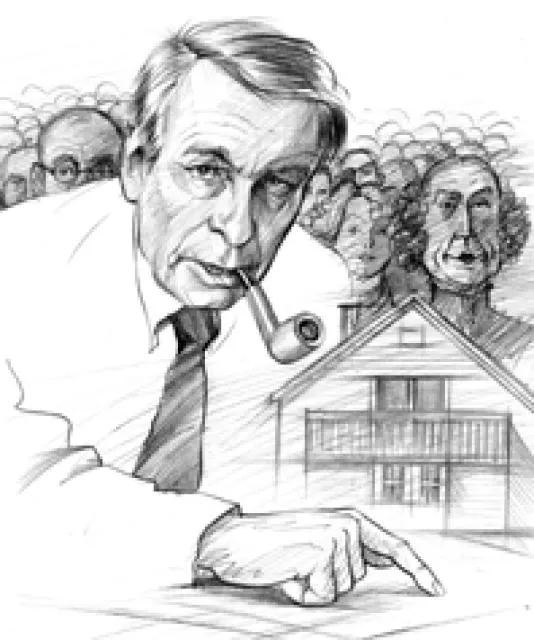 Photo: David Ogilvy, via biographs.org
David Ogilvy was fired from his job at the Mather & Crowther advertising agency in London for what his supervisor called "creative insubordination." His crime? Refusing to write copy that made claims about products that weren't true.
"Advertising should be based on facts, not fantasy," Ogilvy had argued during his final meeting. His boss disagreed. "We sell dreams, David, not dishwashers."
That weekend, Ogilvy sat in his cramped apartment and wrote what would become the foundational document of modern advertising: a manifesto arguing that consumers weren't stupid, that honesty could be more persuasive than hyperbole, and that great advertising should respect the intelligence of its audience.
By Monday morning, he had outlined his approach: meticulous research, clear headlines, and copy that treated potential customers like rational human beings rather than marks to be conned.
Ogilvy moved to New York with $6,000 and founded his own agency. His first major campaign—for Rolls-Royce—featured the headline "At 60 miles an hour the loudest noise in this new Rolls-Royce comes from the electric clock." It was based on an actual test reported in a technical journal.
The ad revolutionized automotive marketing and made Ogilvy's agency the most respected on Madison Avenue. His approach—fact-based, consumer-focused advertising—became the industry standard and influenced generations of marketers who had never heard his name.
"Getting fired was the best thing that happened to me," Ogilvy later wrote. "It forced me to articulate what I believed advertising should be, rather than what I was told it had to be."
2. The Radio Engineer Who Heard Tomorrow
Edwin Armstrong's Last Day: Friday, March 22, 1935
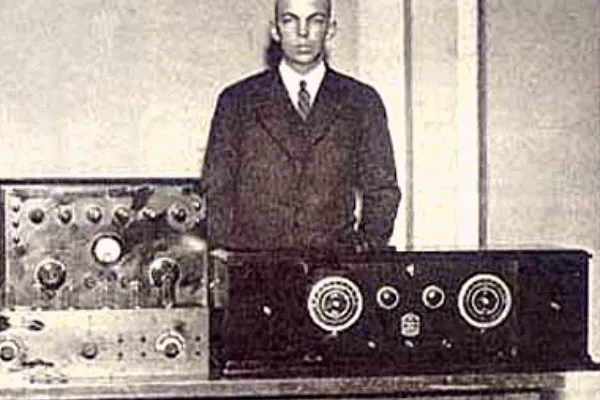 Photo: Edwin Armstrong, via images.squarespace-cdn.com
Edwin Armstrong was fired from RCA's engineering department for "pursuing impractical research directions." His supervisor told him bluntly: "We're in the business of selling radios, not reinventing them."
Armstrong had been working on a transmission method that eliminated the static and interference that plagued AM radio. His colleagues thought it was unnecessary—listeners had adapted to static, and the existing system was profitable.
That weekend, Armstrong cleared out his home workshop and decided to prove them wrong. By Monday, he had committed to developing what he called "frequency modulation" radio, even though no one wanted it.
Working alone in his basement, Armstrong perfected FM radio transmission. His system delivered crystal-clear sound quality that made AM broadcasts sound like they were coming through a tunnel.
When he demonstrated his first FM broadcast in 1936, listeners were stunned. Music sounded like it was being performed in the room. Speech was so clear that whispers came through perfectly.
RCA, meanwhile, was locked into AM technology and fought FM adoption for years. But Armstrong's invention eventually became the foundation for high-quality radio broadcasting, television audio, and later, the wireless communication systems that enable everything from cell phones to WiFi.
"They fired me for chasing impossible dreams," Armstrong said. "Turns out the impossible was just inconvenient for their business model."
3. The Retail Clerk Who Saw the Future of Shopping
Sam Walton's Last Day: Friday, August 17, 1962
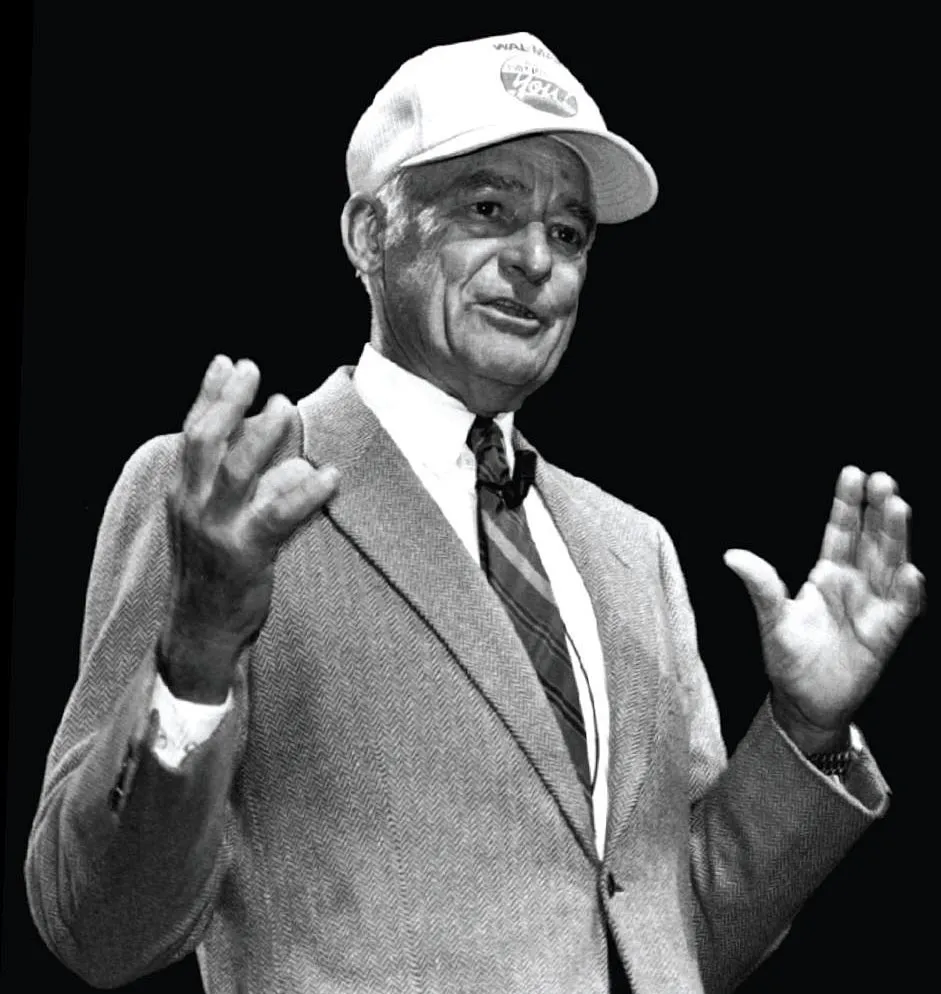 Photo: Sam Walton, via m.media-amazon.com
Sam Walton was fired from his job managing a Ben Franklin variety store in Newport, Arkansas, for "unauthorized operational modifications." He had been experimenting with discount pricing and self-service displays that corporate headquarters deemed "unprofessional."
"Sam kept trying to sell things cheaper and let customers serve themselves," his regional manager explained. "That's not how retail works. Customers expect service and proper markup."
That weekend, Walton drove around small towns in Arkansas and Missouri, studying how people actually shopped. He noticed that customers spent more time looking at prices than talking to salespeople, and they seemed to prefer stores where they could browse without pressure.
By Monday, he had sketched out a retail concept that inverted traditional thinking: instead of high margins on limited inventory, he would offer low margins on vast selection. Instead of commissioned salespeople, he would hire helpful staff who earned hourly wages. Instead of fancy fixtures, he would focus on efficiency and savings.
Walton opened his first Wal-Mart store in Rogers, Arkansas, in 1962. The concept was simple: "We Sell for Less" wasn't just a slogan—it was a complete operational philosophy.
Traditional retailers dismissed Wal-Mart as unsustainable. "You can't make money selling everything cheap," they argued. But Walton understood something they missed: high volume could compensate for low margins, and customers would drive farther for significantly better prices.
Wal-Mart became the world's largest retailer by focusing on what customers actually wanted rather than what retail tradition said they should want.
4. The Insurance Agent Who Revolutionized Risk
Gertrude Cox's Last Day: Friday, November 8, 1940
Gertrude Cox was fired from her job at Mutual Life Insurance for "excessive attention to statistical analysis." Her supervisor told her that insurance was about relationships and intuition, not "mathematical nonsense."
Cox had been developing statistical models to predict life expectancy more accurately than the industry's traditional methods, which relied heavily on basic demographics and medical exams.
"She kept saying we could predict risk better with proper data analysis," her former supervisor recalled. "We told her that experience and judgment were more reliable than formulas."
That weekend, Cox realized that her firing had freed her to pursue something the insurance industry desperately needed but didn't want: scientific accuracy in risk assessment.
By Monday, she had outlined a new approach to insurance based on statistical modeling rather than traditional assumptions. Her methods used multiple variables—occupation, lifestyle, family history, geographic location—to create more precise risk profiles.
Cox founded her own actuarial consulting firm and revolutionized how insurance companies calculated premiums. Her statistical methods made insurance more affordable for low-risk individuals and more accurately priced for everyone else.
More importantly, her work laid the foundation for modern data science. The statistical techniques she developed for insurance risk assessment became the basis for credit scoring, medical research, and eventually, the algorithms that power everything from search engines to social media.
"They fired me for bringing math to a business built on guesswork," Cox later said. "Turns out math was exactly what the business needed."
5. The Factory Supervisor Who Saw Workers as Humans
Mary Parker Follett's Last Day: Friday, December 14, 1917
Mary Parker Follett was fired from her supervisory position at a Massachusetts textile mill for "coddling workers and undermining authority." She had been implementing what she called "collaborative management"—involving workers in decision-making and treating their input as valuable.
"Mary kept asking workers for their opinions about how to improve production," her plant manager explained. "That's not how factories work. Workers follow orders; they don't give them."
That weekend, Follett reflected on what she had observed: workers who felt heard and respected were more productive, more innovative, and less likely to make costly mistakes. Traditional management treated humans like machines, but humans weren't machines.
By Monday, she had committed to developing a new approach to organizational management based on collaboration rather than coercion.
Follett became a management consultant and developed principles that seem obvious now but were revolutionary then: that workers closest to problems often have the best solutions, that cooperation produces better results than competition, and that good management involves bringing out the best in people rather than forcing compliance.
Her ideas influenced generations of business leaders and became the foundation for modern human resources practices. Companies that adopted her collaborative approach consistently outperformed those that stuck to traditional authoritarian management.
"They fired me for treating workers like people," Follett said. "Turns out people work better when they're treated like people."
The Friday Advantage
What connects these five stories isn't just the timing—it's the clarity that comes from being pushed outside a system that wasn't working. Each of these innovators had been constrained by organizations that confused tradition with truth, comfort with competence.
Getting fired forced them to articulate what they actually believed rather than what they were told to believe. It gave them the freedom to pursue ideas that established players found threatening or impractical.
Most importantly, it revealed that being an outsider isn't a disadvantage—it's often the only position from which you can see what insiders have trained themselves to ignore.
Sometimes the best thing that can happen to an industry is for it to fire exactly the people it needs most. These five Americans proved that the edge of the system is often where the future begins.