She Couldn't See Color. She Mapped the Moon Anyway.

She Couldn't See Color. She Mapped the Moon Anyway.
Somewhere in a box of declassified NASA documents, there's a set of lunar surface charts so precise, so carefully rendered in gradients of contrast and texture, that engineers used them to plot the final descent paths for the Apollo missions. The woman who drew them grew up on a wheat farm outside of Dodge City, Kansas, and had never once in her life seen the color red the way you do.
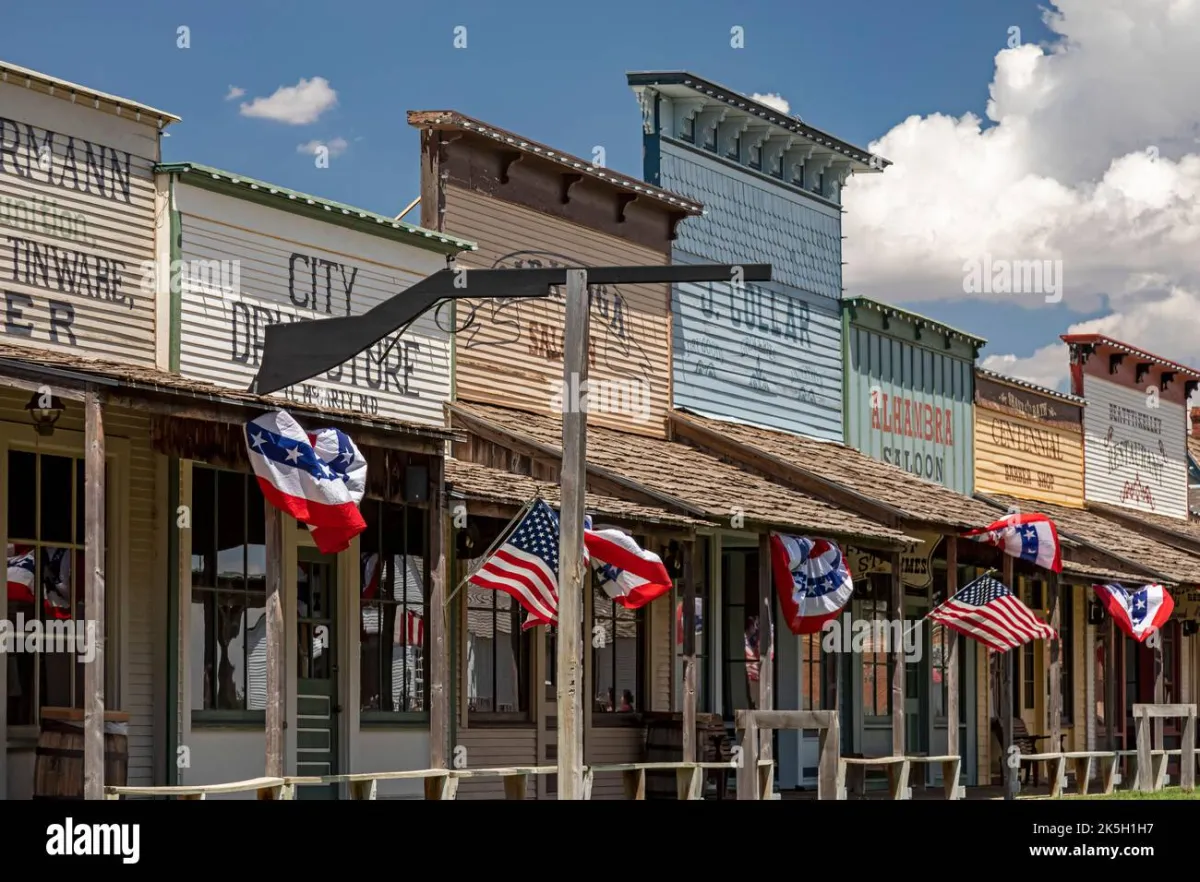 Photo: Dodge City, Kansas, via c8.alamy.com
Her name was Vera Mae Hollis, and almost nobody outside a small circle of aerospace historians knows who she was.
Growing Up Different on the Prairie
Vera was born in 1929, the third daughter of a dry-land wheat farmer and a schoolteacher who ran a one-room classroom six miles from the nearest paved road. From an early age, it was clear that Vera experienced the world differently. She confused reds and greens constantly, misread autumn leaves, and once famously sorted her mother's canning jars by the wrong color labels. A traveling doctor eventually identified her condition as a severe form of deuteranopia — a type of color vision deficiency that collapses the distinction between certain wavelengths of light.
For most children in rural Kansas in the 1930s, that diagnosis would have simply become a footnote in a quiet life. For Vera, it became the first chapter of something else entirely.
Because here's what Vera could see: texture. Contrast. The subtle shifts in shadow that most people's eyes gloss right over. While her classmates saw a cornfield as green and gold, Vera saw a thousand variations in brightness and surface. She drew obsessively — topographical sketches of the land around her farm, contour maps of creek beds, elevation studies of the low hills at the county line. Her high school art teacher, recognizing something unusual, sent a folder of her drawings to the University of Kansas with a handwritten note that read, simply, This girl sees things differently.
The Unlikely Road to NASA
Vera earned a scholarship to study technical illustration at KU, one of only a handful of women in her program. She graduated in 1951, and spent the next several years doing cartographic work for the U.S. Geological Survey — painstaking, unglamorous drafting work that most of her male colleagues treated as a stepping stone. For Vera, it was a masterclass.
In 1959, two years after Sputnik rattled the entire American psyche, Vera applied for a position at the newly formed NASA. The hiring panel was skeptical. A woman. From Kansas. With a documented visual impairment. One committee member reportedly asked whether someone who couldn't distinguish colors had any business making charts for space missions.
The division chief — a former Air Force cartographer named Raymond Elks who had seen enough of conventional thinking to distrust it — overruled the objection. He hired her on a six-month probationary contract.
She stayed for nineteen years.
What She Could See That Others Couldn't
The paradox of Vera's work at NASA is almost poetic. Space, as it turns out, is not a particularly colorful place. The lunar surface is a study in grey. The challenge of mapping it wasn't distinguishing red from green — it was rendering the incredibly subtle variations in elevation, texture, and shadow that would tell an astronaut's descent computer where the ground actually was.
And that, it turned out, was exactly what Vera had been training her eyes to do since childhood.
Her colleagues worked in color-coded systems that looked intuitive on paper but sometimes collapsed into visual noise when reduced to the monochrome imaging that early spacecraft cameras produced. Vera's charts, built from the beginning around contrast and texture rather than color, translated perfectly. What looked like a limitation in the conference room became a superpower in the mission control center.
She developed a system of cross-hatching and tonal gradients that could communicate elevation changes of just a few meters across the lunar surface — a level of precision that earlier mapping methods simply hadn't achieved. Engineers who worked on the Apollo program later described her charts as the clearest, most reliable technical illustrations they had ever used.
The Maps That Guided the Eagle Down
By the mid-1960s, Vera was leading a small team of illustrators working specifically on lunar approach and landing zone documentation. Her work fed directly into the mission planning for Apollo 11. The descent path that Neil Armstrong and Buzz Aldrin followed on July 20, 1969, was plotted against charts that Vera's team had produced — charts that her division chief had once had to fight to let her make.
She watched the landing on a small television in the NASA office break room, surrounded by engineers and technicians who were weeping and cheering. By most accounts, she sat very quietly, watching the screen with the kind of focused attention that had defined her entire career.
She never gave interviews. She didn't write a memoir. When she retired in 1978, her going-away party was attended by about thirty people, most of them colleagues from her immediate team.
Why We Almost Forgot Her
The Space Race produced a handful of celebrated names and thousands of invisible ones. Vera Hollis fell firmly into the second category, partly by temperament — she was famously private — and partly by the structural invisibility that technical illustrators, especially women, experienced throughout that era. The scientists got the headlines. The engineers got the documentaries. The cartographers got file boxes in federal archives.
But her story has started to surface in recent years, primarily through the work of aerospace historians and a small group of researchers focused specifically on the women of NASA's technical divisions. A 2019 oral history project at the Kansas Historical Society recovered interviews with several of her former colleagues, who described her work in terms that bordered on reverence.
"She saw the moon the way the moon needed to be seen," one former NASA engineer said. "Not in color. In truth."
The Lesson in the Limitation
Vera Hollis never framed her color vision deficiency as an advantage. She was too practical for that kind of narrative. But her career makes a compelling case that the context in which a perceived limitation operates matters enormously — sometimes more than the limitation itself.
Placed in an art classroom, her condition was a problem to manage. Placed in a room where someone needed to render the surface of the moon with enough precision to land a spacecraft on it, it was something closer to a gift.
She died in 2003, at seventy-three, in a small house outside Lawrence, Kansas. Her obituary ran four paragraphs in the local paper.
The maps are still in the archives. They're still extraordinary.