She Came for One Day and Stayed Thirty Years. Then She Disappeared Into History.

She accepted a one-day substitute teaching assignment at a struggling rural school and never left. For three decades, she quietly shaped the minds of students who would go on to build companies, lead movements, and change industries — and she never once asked for credit. Her name almost vanished entirely until a single sentence in a commencement speech brought her back.
A Monday Morning in the Middle of Nowhere
In the fall of 1951, Dorothea Marsh drove forty minutes down a gravel road in central Appalachia to fill in for a seventh-grade teacher who had called in sick. She was thirty-one years old, recently widowed, and taking substitute work to cover rent on a two-room apartment in a town that barely qualified as one.
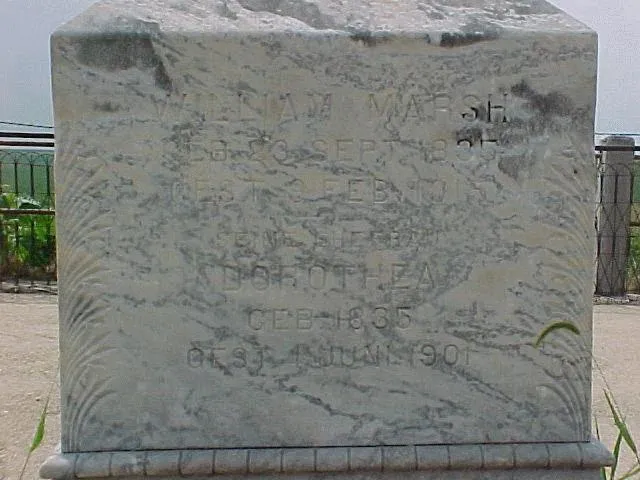 Photo: Dorothea Marsh, via usgennet.org
The school had no gymnasium, no library to speak of, and a heating system that worked roughly half the time. Seventeen students sat in desks that had been repaired so many times the repairs had their own repairs. Dorothea had been told the assignment would last a single day.
The regular teacher didn't come back the following Monday. Or the one after that. By November, the district — short on options and shorter on budget — quietly asked Dorothea if she'd stay on through the semester.
She said yes. The semester became a year. The year became a decade. And then, without anyone quite marking the moment it happened, three decades had passed.
What She Actually Taught
Dorothea never had a formal teaching credential. What she had was something harder to quantify: an absolute refusal to let a student believe the ceiling above them was fixed.
The curriculum she was supposed to deliver was standard-issue and uninspired. What she actually delivered, woven through every lesson in every subject, was a relentless interrogation of assumption. Why does it work this way? What would happen if it worked differently? Who decided that, and what were they afraid of when they did?
Former students, interviewed decades later, described her classroom as the first place they had ever been asked to think rather than remember. One described a math lesson she turned into a discussion about who controlled pricing in the local coal industry and why. Another remembered a history class that somehow became an examination of how small groups of people had, throughout time, convinced larger groups to act against their own interests — and what that meant for the kids sitting in those desks.
She wasn't teaching subjects. She was teaching frameworks. The kind that, once installed in a young mind, don't come out.
The Students Nobody Expected
The children who passed through Dorothea's classroom over thirty years came mostly from families that mined coal, farmed exhausted land, or worked in the few small businesses that lined the county's main street. College was, for most of them, a concept rather than a plan.
But something happened to a remarkable number of them.
One became a co-founder of a logistics company that would eventually employ tens of thousands of people. Another built a regional banking network that brought financial services to rural communities that the major banks had long since abandoned. A third spent thirty years in public health, designing vaccination distribution systems that epidemiologists still cite as models of efficiency. A fourth went into labor law and spent a career representing workers in industries where representation had previously been unthinkable.
None of them were prodigies. None came from money. What they shared, almost to a person, was a memory of a woman who had looked at them — specifically at them, not at the class as a unit — and asked them what they thought.
The Woman Who Refused to Be the Story
Dorothea Marsh retired in 1981 at the age of sixty-one, having never sought a teaching credential, a promotion, or a salary above the substitute pay scale that the district had quietly continued to apply to her for three decades because nobody had ever gotten around to reclassifying her position.
She gave no retirement speech. She didn't attend the small gathering the school organized in her honor. She moved to a smaller town two counties over, tended a garden, and by all accounts spent her final years reading voraciously and corresponding with a handful of former students who had tracked down her address.
She died in 1994. Her obituary ran four sentences in the local paper.
The Sentence That Changed Everything
For years, that might have been the end of it.
Then, in 2019, a tech entrepreneur named Gerald Puckett stood at a podium to deliver a commencement address at a major midwestern university. Puckett, who had built and sold two software companies and was known for speeches that were polished and professionally coached, went off script near the end.
 Photo: Gerald Puckett, via everloved.com
He talked about a woman who had taught him in a falling-apart classroom in rural Appalachia when he was twelve years old. He said she was the reason he had learned to ask the right questions instead of just looking for the right answers. He said she had never been properly credited for anything she built, because everything she built was other people.
"Her name was Dorothea Marsh," he said, "and I don't think she would have wanted me to say it. But I've been not saying it for forty years, and I think that's long enough."
The speech went viral within forty-eight hours.
What Gets Left Out of the Story of Success
In the months that followed Puckett's speech, journalists and researchers began tracking down Dorothea's former students. What they found was a pattern so consistent it was almost difficult to believe: person after person, across wildly different fields and decades, describing a single formative influence. A woman who showed up for one day and decided, without fanfare or announcement, that the work was worth staying for.
The uncomfortable truth embedded in Dorothea Marsh's story is one that American culture tends to sidestep: the most important architects of success are often the ones who receive none of its rewards. The builders who work entirely in other people's foundations, who measure their output not in revenue or recognition but in the quality of questions a twelve-year-old learns to ask.
She came for a Monday. She stayed for thirty years. And then she slipped quietly out the door, leaving behind a room full of people who, decades later, were still thinking in the shape she had given them.