Written Off: Five Americans Who Turned Their 'Expiration Dates' Into Launch Pads

The Myth of the Expiration Date
American culture loves a young genius story. We celebrate the college dropout who builds a tech empire, the twenty-something entrepreneur who disrupts an industry, the prodigy who changes the world before their thirtieth birthday. But what about the stories that don't fit the narrative? What about the Americans who were written off as too old, too slow, or too broken—only to prove that experience, persistence, and a refusal to accept limitations can be more powerful than youth and speed?
Here are five individuals who turned their supposed expiration dates into launch pads for extraordinary second acts.
1. The Farmer Who Revolutionized Technology at 78
Frank Henderson - Agriculture Technology
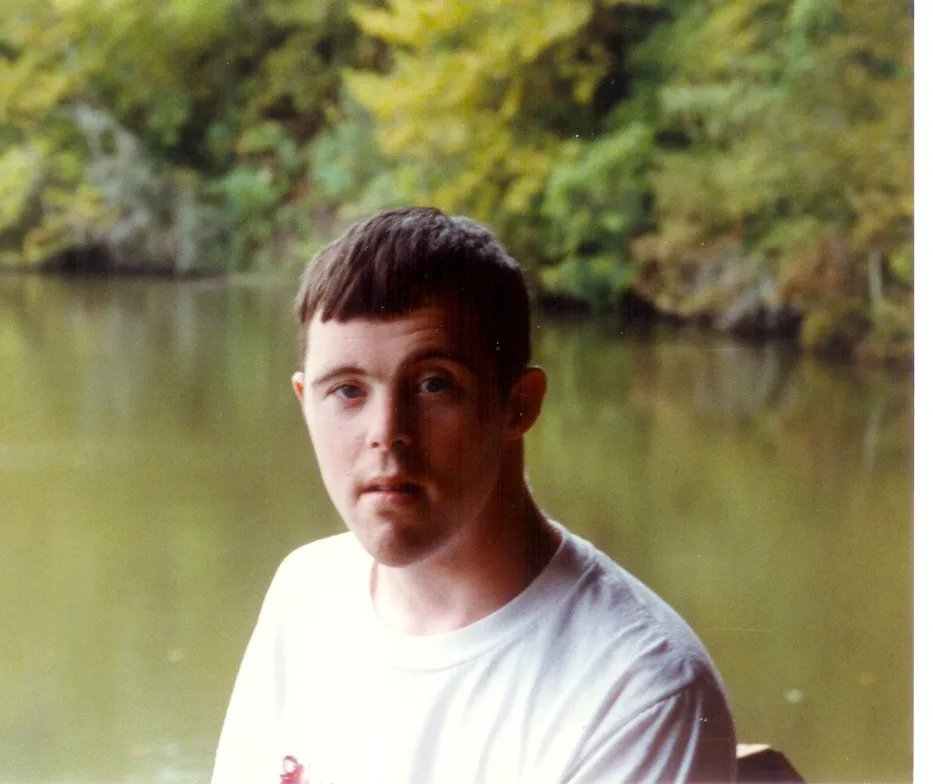 Photo: Frank Henderson, via www.thewilcoxprogressiveera.com
When Frank Henderson's arthritis became too severe for him to work his 300-acre corn farm in Iowa, his children assumed he'd finally retire. Henderson had other plans. At 78, with hands so gnarled he could barely hold a pencil, he began designing what would become the most widely-used precision agriculture system in American farming.
Henderson's breakthrough came from frustration. Traditional farming equipment required physical strength he no longer possessed, but his decades of experience had taught him to read soil conditions, weather patterns, and crop health with an intuition that younger farmers couldn't match.
Working with a local engineering student, Henderson developed a sensor system that could translate his accumulated knowledge into automated decisions. The system could detect soil moisture, nutrient levels, and pest problems with greater accuracy than human observation, then adjust irrigation, fertilization, and pest control accordingly.
"Everyone said I was too old to learn new technology," Henderson recalled. "But I wasn't learning technology—I was teaching it everything I knew."
Henderson's company, AgriWise Systems, was acquired by John Deere in 2018 for $340 million. Today, his precision agriculture technology is used on farms across the Midwest, increasing crop yields by an average of 23% while reducing water usage by 30%.
2. The Stroke Survivor Who Built a Media Empire
Dorothy Chen - Digital Media
 Photo: Dorothy Chen, via www.doremiproject.org
The stroke hit Dorothy Chen at 71, leaving her partially paralyzed and struggling with speech. Her family gently suggested it might be time to "take things easy." Chen had spent forty years as a high school English teacher in San Francisco's Chinatown, but her teaching days were clearly over.
Or so everyone thought.
Using voice recognition software and her one functioning hand, Chen began creating educational videos for English language learners, drawing on her decades of classroom experience. Her approach was different from younger content creators—less flashy, more patient, focused on the specific challenges faced by older immigrants trying to navigate American culture.
"My students always said I explained things in a way that made sense," Chen said through her speech therapy app. "Age doesn't change that gift—it just changes how you share it."
Chen's YouTube channel, "Teacher Dorothy," now has 2.3 million subscribers. Her online English courses have helped over 100,000 students, and her educational content company generates $8 million annually. At 76, she's reaching more students than she ever did in a traditional classroom.
3. The 'Washed-Up' Athlete Who Dominated Business
Marcus Rodriguez - Sports Entertainment
By 68, former heavyweight boxer Marcus Rodriguez was a cautionary tale about athletes who don't know when to quit. His last professional fight had been a disaster—a first-round knockout that left him hospitalized and prompted calls for mandatory retirement ages in boxing.
But Rodriguez's real fight was just beginning.
Using his connections in the boxing world and a lifetime of understanding what fans really wanted to see, Rodriguez launched Underground Champions, a promotion company focused on amateur and semi-professional fighters who'd been overlooked by major organizations.
"Everyone focuses on the champions," Rodriguez explained. "But fans connect with the fighters who remind them of themselves—the ones still chasing their dreams."
Rodriguez's events became known for their intimate atmosphere and focus on storytelling. Instead of just fights, he created narratives around each competitor, highlighting their backgrounds, struggles, and motivations. His shows sold out consistently, attracting fans who'd grown tired of the spectacle-driven approach of major promotions.
Underground Champions was acquired by ESPN in 2019 for $125 million. Rodriguez, now 73, serves as creative director and has launched similar programs in MMA and amateur wrestling.
4. The 'Obsolete' Engineer Who Powered the Future
Sarah Mitchell - Renewable Energy
Sarah Mitchell's career in nuclear engineering effectively ended at 64 when the last nuclear plant in her region was decommissioned. Younger colleagues moved to other states or transitioned to different industries. Mitchell, facing age discrimination and a skill set that seemed increasingly irrelevant, was told to consider early retirement.
Instead, she saw an opportunity.
Mitchell realized that her expertise in managing complex energy systems—skills developed over thirty years in nuclear power—were exactly what the emerging solar industry needed. Solar farms required the same kind of sophisticated grid management and safety protocols that she'd been implementing for decades.
"Everyone thought nuclear and solar were opposites," Mitchell said. "But they're both about safely managing massive amounts of energy and distributing it efficiently. The principles are identical."
Mitchell founded SolarGrid Solutions, specializing in large-scale solar installations for municipalities and corporations. Her company's safety record and efficiency rates quickly set industry standards. Within five years, SolarGrid was managing solar installations across twelve states.
At 72, Mitchell sold her company to Tesla for $180 million. She now consults for renewable energy projects worldwide, proving that experience in "obsolete" technologies can be the foundation for revolutionary new ones.
5. The 'Disabled' Inventor Who Changed Entertainment
Robert Kim - Accessible Technology
Robert Kim's Parkinson's diagnosis at 69 seemed to mark the end of his career as a precision instrument maker. The tremors that made fine motor control impossible also made his forty-year profession unreachable.
But Kim's limitations sparked an innovation that would transform how millions of Americans experience entertainment.
Struggling to use standard remote controls and gaming devices, Kim began designing adaptive interfaces that could respond to gross motor movements rather than fine motor control. His prototypes allowed people with various physical limitations to navigate streaming services, play video games, and control smart home devices.
"I wasn't trying to build a business," Kim reflected. "I just wanted to watch Netflix without getting frustrated."
Kim's adaptive technology caught the attention of major electronics manufacturers who realized they'd been ignoring a massive market. His company, Accessible Interfaces, now licenses technology to Samsung, Sony, and Microsoft. The adaptive controllers and interfaces he designed are used by over 3 million Americans with various physical limitations.
Kim, now 75, has expanded into adaptive technology for automobiles and workplace equipment. His innovations have opened up employment and entertainment opportunities for millions of Americans who'd been excluded by traditional interface design.
The Real Expiration Date
These five Americans share more than just late-in-life success—they demonstrate that society's assumptions about age, ability, and relevance are often wrong. Their stories remind us that experience, perspective, and persistence don't diminish with age; they accumulate.
In a culture obsessed with youth and speed, these unlikely legends prove that sometimes the best time to start something revolutionary is when everyone else thinks you're finished. The only real expiration date is the one you accept for yourself.