The Honey Farmer's Daughter Who Made the IRS Tremble
The Temp Who Wouldn't Let Go
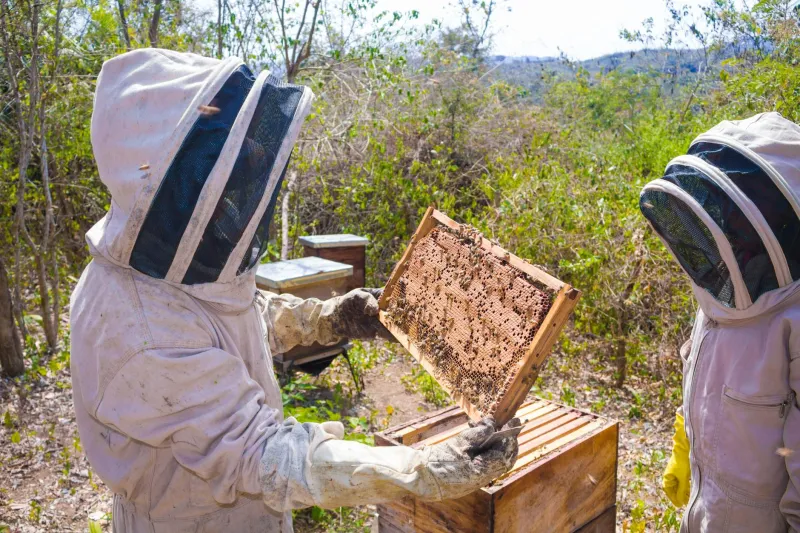
Mary Beth Tinsley learned two things growing up on her father's bee farm in eastern Kentucky: bees reward patience, and mountains don't move for anyone. She'd need both lessons when she accidentally uncovered one of the largest corporate tax evasion schemes in American history—and spent nine years fighting to expose it.
 Photo: Mary Beth Tinsley, via imgv2-2-f.scribdassets.com
It was 1998, and Tinsley was working her third temp job that year, filing invoices at a mid-sized accounting firm in Lexington. At 34, she was a single mother with a high school diploma, bouncing between clerical work to keep the lights on. Corporate finance was as foreign to her as quantum physics.
That's exactly why she noticed what the experts missed.
When Ignorance Becomes Investigation
While organizing client files, Tinsley kept seeing the same pattern: companies with nearly identical expense reports, down to the dollar amount. Her supervisor brushed off her questions—these were "sister companies," he explained, naturally they'd have similar costs.
But Tinsley had grown up watching her father track every hive, every harvest. She knew the difference between similar and identical. "In beekeeping, if two hives are doing exactly the same thing, one of them's probably dying," she'd later tell investigators.
So she started keeping notes. Lunch hours spent in the break room became detective work sessions. She mapped connections between companies, traced money flows, and discovered what federal investigators would later call "a masterpiece of coordinated fraud"—dozens of shell companies shuffling fake expenses to avoid paying taxes on nearly $2 billion in profits.
The accounting firm was the hub. And Tinsley was the only person naive enough to think someone should do something about it.
David vs. Goliath, Kentucky Style
When Tinsley first called the IRS whistleblower hotline, the agent who answered seemed more interested in ending the call than hearing her story. She didn't have a law degree, didn't understand securities regulations, couldn't even pronounce "derivative" correctly.
What she had was a banker's box full of photocopied evidence and the kind of determination that comes from watching your father rebuild after every bad winter.
"They kept telling me I didn't understand how business worked," Tinsley recalls. "But I understood how lying worked. And I understood how stealing worked. The rest was just paperwork."
The paperwork, however, was staggering. Federal prosecutors needed someone who could walk them through years of complex financial records. Tinsley became their translator, working nights and weekends to decode the very fraud she'd discovered.
The Price of Speaking Truth
What followed was nearly a decade of legal warfare. The accounting firm fought back with everything they had: lawsuits, intimidation tactics, attempts to discredit Tinsley as an "disgruntled employee" with "delusions of grandeur."
They underestimated mountain stubbornness.
Tinsley lost jobs when word spread about her case. She faced death threats. Her car was vandalized. Friends stopped calling, afraid of being associated with someone taking on powerful interests.
"There were nights I wondered if I was crazy," she admits. "But then I'd think about my daughter, about the schools that weren't getting funded because these companies weren't paying taxes. You can't un-know something like that."
Victory at Last
In 2007, the government's case finally went to trial. The evidence Tinsley had gathered—and spent years helping prosecutors understand—proved devastating. The accounting firm and its clients paid $847 million in back taxes and penalties.
Under federal whistleblower laws, Tinsley received 15% of the recovery: nearly $127 million.
But the real victory, she says, wasn't the money. It was proving that the system could work, even for someone like her.
The Unlikely Advantage
Tinsley's success came precisely because she was an outsider. She didn't know that certain questions weren't supposed to be asked, that certain patterns were "just how business works." Her ignorance of insider rules became her greatest weapon.
"The experts all missed it because they were looking for sophisticated schemes," explains former IRS investigator Robert Chen, who worked on the case. "Mary Beth found it because she was looking for the truth. Sometimes those are very different things."
 Photo: Robert Chen, via winsko.pl
Today, Tinsley runs a foundation that helps other whistleblowers navigate the legal system. She still lives in Kentucky, still tends her father's old bee farm. The hives, she says, keep her grounded.
"Bees don't care if you have a law degree," she laughs. "They care if you're paying attention. Turns out, that's all I ever needed."