From Kitchen Sketches to Design Legend: The Undocumented Worker Whose Napkin Drawings Conquered American Homes
The Invisible Artist
Miguel Ramirez's hands were always wet. For twelve hours a day, six days a week, he stood hunched over industrial sinks in the back kitchen of Chez Laurent, an upscale Beverly Hills restaurant where the cheapest entrée cost more than he made in two days. The scalding water turned his fingers raw, and the constant steam left his work shirt perpetually damp.
 Photo: Chez Laurent, via www.sparkthemagazine.com
 Photo: Miguel Ramirez, via c8.alamy.com
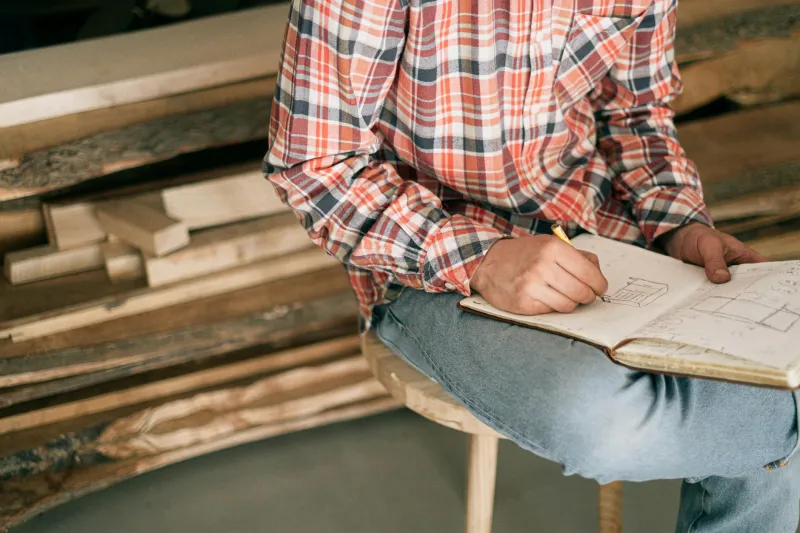
But during his ten-minute smoke breaks in the alley behind the restaurant, something extraordinary happened. Miguel would pull out crumpled napkins from his pocket and sketch.
Not the kind of sketches you'd expect from someone whose formal education ended at age fourteen in rural Oaxaca. These were furniture designs—clean, geometric pieces that seemed to float on the page. Chairs that defied gravity. Tables that looked like sculpture. Storage solutions that somehow felt alive.
"The other guys thought I was crazy," Miguel recalls, now speaking from his design studio in Culver City. "They'd see me drawing these chairs and laugh. 'Miguel, you wash dishes. Why you drawing furniture for rich people?'"
The answer would reshape American interior design.
When Necessity Meets Innovation
Miguel's designs weren't born from art school theory or European influences. They emerged from a much more practical place: the cramped studio apartment he shared with four other workers in East LA.
"We had no space, no money, but we needed everything—places to sit, eat, sleep, store our things," he explains. "I started thinking: what if one piece of furniture could do three jobs? What if it could fold away when you didn't need it?"
His breakthrough came from watching his roommate struggle to fit a traditional dining table through their narrow doorway. That night, Miguel sketched a table that could be assembled inside the apartment—flat panels that locked together without tools, creating something sturdy enough to hold dinner for six but light enough for one person to move.
The design violated every rule he'd never learned about furniture construction. And that's exactly why it worked.
The Napkin That Changed Everything
The turning point came on a Tuesday evening in 1987. Miguel was clearing tables in the restaurant's main dining room—a rare assignment that took him out of the kitchen—when he overheard a conversation that would change his life.
Two women at table twelve were complaining about their recent furniture shopping experience. "Everything looks the same," one said. "Heavy, expensive, and impossible to move. I'm tired of choosing between beautiful and practical."
Miguel's English was still rough, but he understood enough. During his next break, he sketched furiously on a napkin: a chair that could stack flat against a wall or expand into a comfortable seat with a hidden storage compartment.
Instead of throwing the napkin away, he did something that surprised even him. He walked back to table twelve.
"Excuse me, ladies," he said in careful English, napkin in hand. "I think maybe I have something you want to see."
From Alley to Gallery
What happened next reads like fiction, but the witnesses are still alive to tell it. The woman at table twelve was Sarah Chen, an interior designer whose clients included several Hollywood A-listers. She stared at Miguel's napkin sketch for a full minute before asking, "Did you draw this?"
When Miguel nodded, Sarah did something unprecedented in her fifteen-year career: she asked a dishwasher for his business card.
"I don't have business," Miguel replied. "I have dishes."
Sarah handed him her card instead. "Can you make this chair? I'll pay you to build a prototype."
Three weeks later, Miguel had constructed his first piece using borrowed tools in a friend's garage. The chair was everything his sketch promised—elegant, functional, and unlike anything in the current market.
Sarah ordered twelve immediately.
The Accidental Revolution
What Miguel didn't realize was that he'd stumbled onto something the furniture industry had been missing for decades. His designs solved problems that formally trained designers couldn't see because they'd never lived them.
"Miguel understood small spaces because he lived in one," explains furniture historian Dr. Patricia Knowles. "He understood the need for multi-functional pieces because he couldn't afford to buy single-purpose items. His constraints became his greatest creative advantages."
Within two years, Miguel's designs were featured in Architectural Digest. Within five, major furniture manufacturers were licensing his concepts. His "Origami Collection"—inspired by his need to maximize space—became a bestseller at West Elm and CB2.
Today, pieces from his early napkin sketches are housed in the permanent collection at the Museum of Modern Art.
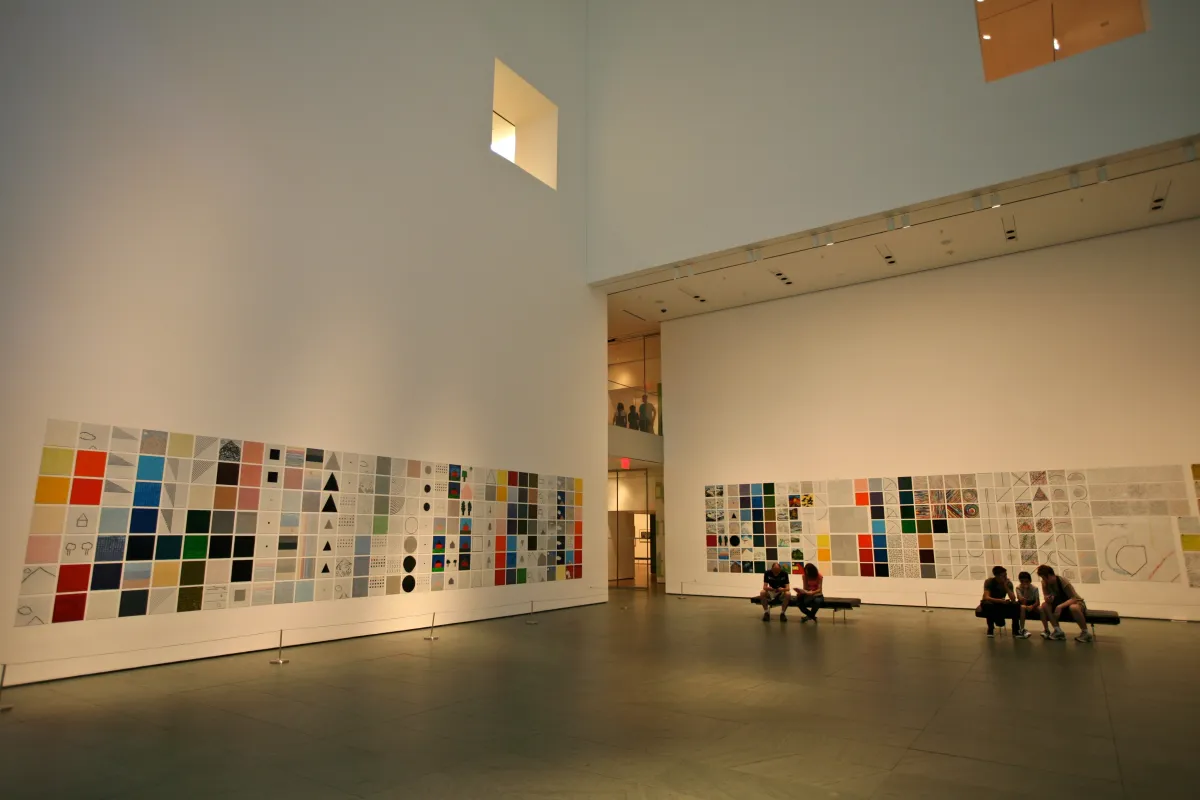 Photo: Museum of Modern Art, via upload.wikimedia.org
The Outsider Advantage
Miguel's story reveals something profound about innovation: sometimes the best solutions come from people who aren't supposed to have the answers.
"When you don't know the rules, you can't break them—because you never learned they existed in the first place," Miguel reflects. "The furniture industry had all these ideas about what chairs should look like, how tables should be built. I just thought about what people actually needed."
His success opened doors for other unlikely designers. Today, Miguel's company employs seventeen people, many of them immigrants whose first jobs in America were in kitchens, warehouses, and construction sites.
"We hire for perspective, not pedigree," he says. "The best ideas come from people who see problems differently."
From Invisible to Influential
Miguel Ramirez never went back to washing dishes. But he kept the napkins—dozens of them, now framed in his studio as reminders of where breakthrough thinking can come from.
His story challenges everything we think we know about expertise, creativity, and who gets to shape the spaces we live in. Sometimes the most revolutionary ideas come from the most unlikely places: the back of a restaurant, a crumpled napkin, and the mind of someone who was never supposed to be designing furniture in the first place.
In an industry built on tradition and formal training, Miguel proved that the best qualification for reimagining how we live might just be knowing what it's like to struggle with the spaces we're given.