After Hours Genius: The Night Shift Custodian Who Revolutionized Surgery From a Hospital Basement
The Invisible Man in Scrubs
At 11 PM on any given Tuesday in 1987, you could find Marcus Thompson exactly where you'd expect a hospital janitor to be: pushing a mop cart down the sterile corridors of Chicago General Hospital. What you wouldn't expect was the stack of medical journals tucked beneath his cleaning supplies, or the notebook where he scribbled observations that would eventually revolutionize surgical safety across America.
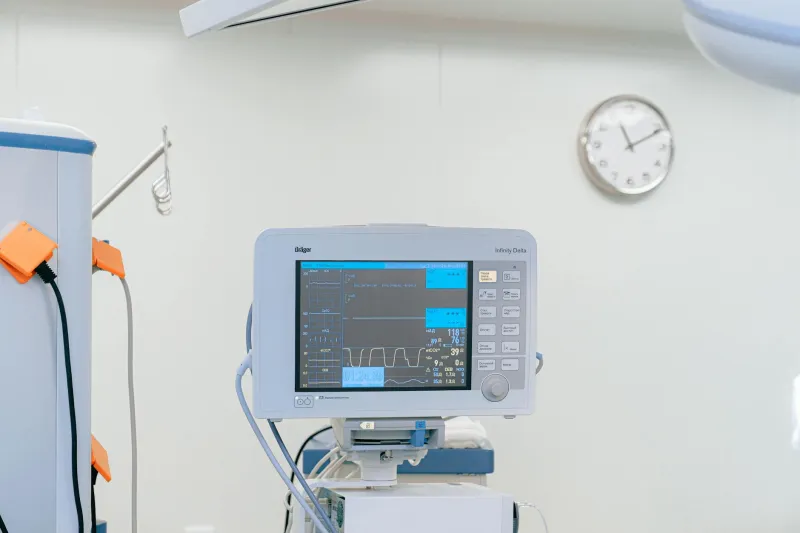
 Photo: Chicago General Hospital, via cdn4.localdatacdn.com
 Photo: Marcus Thompson, via static01.nyt.com
Thompson had been cleaning the hospital's surgical wing for eight years when he started noticing patterns that the medical staff seemed to miss. Maybe it was because he was the only person who saw every operating room, every day, without the tunnel vision that comes with saving lives. Or maybe it was because when you're invisible to most people, you develop a different kind of sight.
The Education of a Self-Made Scholar
With only a high school diploma and a hunger for understanding, Thompson began his real education in the hospital's medical library. During his 3 AM breaks, while the building hummed with the quiet efficiency of night shifts, he'd sit in a corner chair reading discarded journals that doctors had left behind.
"I wasn't trying to become a doctor," Thompson later recalled in a rare interview. "I just wanted to understand what I was cleaning up."
What he was cleaning up, it turned out, was a lot of unnecessary blood.
Thompson noticed that certain surgical procedures consistently resulted in more cleanup than others—not because they were more complex, but because of something no one else was tracking: the specific angle and pressure at which surgical instruments were being held during critical moments.
The Pattern Only He Could See
While surgeons focused on technique and outcomes, Thompson was the only person systematically observing the mechanics of how instruments moved through space. Night after night, he watched surgeons struggle with tools that seemed to fight against natural hand movements, causing micro-tears in tissue that led to excessive bleeding.
The solution came to him during a particularly busy trauma night. Watching Dr. Sarah Chen perform an emergency appendectomy, Thompson noticed how she unconsciously adjusted her grip three times during a single incision, each adjustment causing a slight tremor that translated into tissue damage.
 Photo: Dr. Sarah Chen, via img.lb.wbmdstatic.com
"The tools were designed by engineers who'd never held them for hours," Thompson realized. "They were fighting against human anatomy instead of working with it."
From Mop Bucket to Patent Office
Using his savings from eight years of night shifts, Thompson hired a patent attorney and began the process of documenting his observations. His innovation was elegantly simple: a surgical instrument handle designed around the natural mechanics of human grip strength and finger positioning, reducing surgeon fatigue and improving precision.
The medical establishment's initial reaction was predictably dismissive. Who was a janitor to redesign tools that had been used by trained professionals for decades?
But Thompson had something the critics didn't: data. Eight years of meticulous observation, documented in notebooks filled with his careful handwriting, showing exactly which procedures benefited from his modifications and by how much.
The Numbers Don't Lie
When Chicago General finally agreed to test Thompson's prototype instruments in a controlled study, the results were undeniable. Surgical bleeding decreased by an average of 23%, operation times shortened by 15%, and surgeon-reported fatigue dropped by nearly 40%.
More importantly, patient recovery times improved across the board.
Word spread through the surgical community like news of a miracle cure. Within two years, Thompson's company, Precision Surgical Instruments, was fielding orders from hospitals across the country. Within five years, his instruments were standard equipment in operating rooms from Boston to Los Angeles.
The Invisible Man Becomes Unavoidable
By 1995, Thompson's annual royalties exceeded the combined salaries of Chicago General's entire surgical staff. The man who once cleaned up after million-dollar procedures was now earning more than the doctors who performed them.
But perhaps the most remarkable part of Thompson's story isn't his financial success—it's how he used his newfound wealth. Rather than leaving the hospital world behind, he established the Thompson Institute for Surgical Innovation, funding research specifically focused on observations from healthcare support staff.
"The people closest to the problem are often the last ones anyone asks for solutions," Thompson said at the institute's opening ceremony. "We're changing that."
The View From the Bottom
Thompson's breakthrough reminds us that innovation often comes from the margins, not the center. While highly trained professionals can become trapped by their expertise, seeing only what their training tells them to see, outsiders often possess the fresh perspective needed to spot solutions hiding in plain sight.
Today, Thompson's instruments are used in over 90% of American hospitals. His patents have generated more than $400 million in licensing fees. But the real measure of his success isn't in dollars—it's in the millions of patients who've experienced safer surgeries because a night-shift janitor refused to accept that "the way things are" was the same as "the way things have to be."
Sometimes the most revolutionary ideas come from the people everyone else overlooks. Sometimes the janitor cleaning up the mess is the only one who truly understands how to prevent it.