The Double Life Playbook: Five Americans Who Built Empires While Nobody Was Looking

Ambition doesn't always announce itself. Sometimes it wears a uniform, drives a route, plays hymns on a Sunday morning, and waits. The most patient builders in American business history weren't always the loudest ones in the room. Sometimes they were the ones nobody was watching at all.
Here are five Americans who turned an ordinary day job into the most effective camouflage an entrepreneur can have — and used the cover to build something extraordinary.
1. The Bus Driver Who Built a Regional Airline
For eleven years, Elmore Strickland drove School Bus Route 14 through the flat, sprawling suburbs of Tulsa, Oklahoma. He was punctual, patient with kids, and well-liked by parents who waved from driveways every morning. His supervisor described him as the most reliable employee in the district.
 Photo: Elmore Strickland, via athletestories.gr
What his supervisor didn't know was that Elmore had been quietly accumulating FAA certifications, buying fractional ownership stakes in small charter aircraft, and building a network of regional cargo contracts — all on evenings, weekends, and the long summers when the buses sat idle.
The logic was deliberate. The bus driving job provided health insurance, a steady paycheck, and — crucially — a schedule that freed his afternoons. While his neighbors assumed he was napping or watching television after his morning route, Elmore was on the phone with freight brokers, regional airport managers, and small manufacturers looking for cheaper ways to move goods across the mid-continent.
By 1987, when he finally handed in his bus keys, Strickland Regional Air Freight operated seven aircraft and served fourteen cities across Oklahoma, Kansas, and Missouri. His former coworkers threw him a retirement party. None of them had any idea what they were actually celebrating.
"The bus route taught me scheduling," Elmore said in a 1991 profile in a Tulsa business publication. "Every stop, every timing window, every connection point. I just applied it to a different kind of route."
2. The Church Pianist Who Funded a Pharmaceutical Startup
Every Sunday morning for fourteen years, Dorothea Vance played piano at First Baptist Church in Baton Rouge, Louisiana. She played at weddings, funerals, and the occasional revival. She taught private lessons on weekday afternoons to the children of congregation members who could afford the modest fee.
 Photo: Dorothea Vance, via d1hbpr09pwz0sk.cloudfront.net
The piano money — modest as it was — went directly into a separate savings account that Dorothea never touched for personal expenses. It was seed capital, accumulating at the rate of a few hundred dollars a month, for a biochemistry startup she was building in parallel with her graduate research at LSU.
Dorothea had a doctorate in biochemistry and a specific, consuming obsession with enzyme-based drug delivery systems. She had been told repeatedly — by advisors, by early-stage investors, by the kind of people who populate academic grant committees — that her research was interesting but too speculative to fund at the scale she needed.
So she funded it herself. Sunday by Sunday.
The startup, which she incorporated quietly in 1979, was acquired in 1991 for a figure that her attorney later described, in a court filing related to a separate matter, as "significant by any reasonable measure." The acquiring company used her enzyme delivery platform as the foundation for two medications that went on to widespread clinical use.
Dorothea continued playing piano at First Baptist for three years after the acquisition. Old habits, she told a friend, are hard to break.
3. The Overnight Toll Collector Who Built a Real Estate Portfolio in Secret
From 1962 to 1979, Arthur Pimentel worked the overnight shift at a toll plaza on the New Jersey Turnpike. He collected quarters and dollars through a small window, handed back change, and watched the taillights of ten thousand cars disappear into the dark every night.
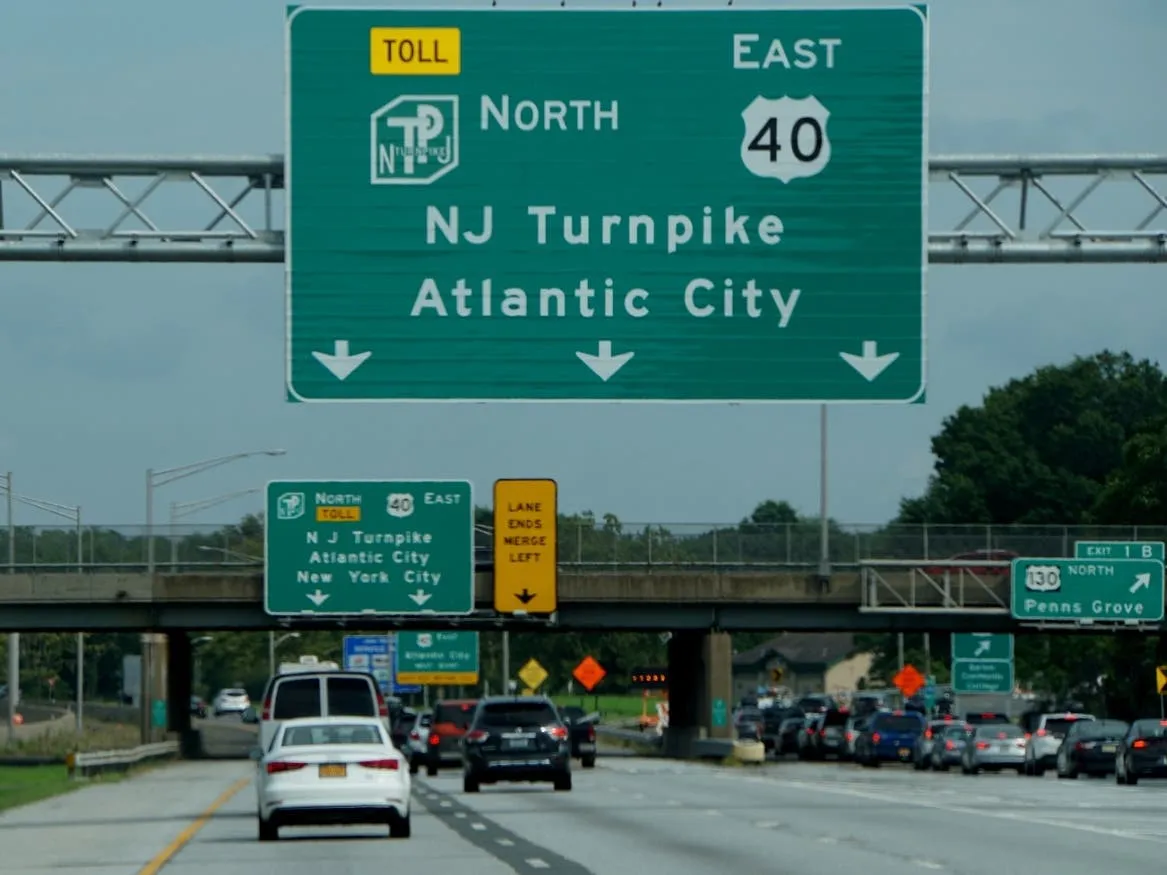 Photo: New Jersey Turnpike, via patch.com
It was not a glamorous job. Arthur would have been the first to tell you that.
But the overnight shift paid a modest premium, required almost no social energy, and left Arthur's days completely free. He slept from roughly 8 AM to 2 PM, and spent the remaining hours driving through neighborhoods in Newark, Trenton, and Camden, looking at properties that nobody else wanted to look at.
In 1965, he bought his first building — a six-unit apartment house in a neighborhood that most investors had written off — using savings accumulated over three years of overnight tolls and a small loan from his uncle. He fixed it up himself on weekends, rented the units, and used the income to buy the next building. Then the next.
By the time he left the toll plaza in 1979, Arthur owned forty-three residential units across three New Jersey cities. His coworkers at the toll authority knew him as quiet, reliable, and slightly mysterious about what he did with his time.
"Nobody asked," Arthur said once, in a neighborhood newsletter interview. "People assume that if you work a toll booth, you're not doing anything else. That assumption was the most valuable thing I had."
4. The Elementary School Librarian Who Quietly Launched a Publishing House
For twenty-two years, Margaret Osei checked out books, read aloud to second-graders, and maintained the orderly, slightly dusty calm of the Pinewood Elementary School library in Decatur, Georgia. She was beloved. Students remembered her for decades.
She was also, during those same twenty-two years, running a small but serious independent publishing operation from a converted garage behind her house.
Margaret had noticed something in her library work: the books that Black children in her school could see themselves in were scarce, and the ones that existed were often poorly distributed, hard to find, and treated by the major publishing industry as a niche rather than a market. She decided, with the methodical patience of a woman who had spent two decades cataloging books by the Dewey Decimal System, to fix that.
Her publishing house — which she ran under a business name that gave no hint of her identity — started with three titles in 1971. By the time she retired from the school library in 1989, it had published over two hundred titles, established distribution relationships with independent bookstores in fourteen states, and become a quiet but significant force in what would later be recognized as a foundational era for Black children's literature in America.
Her principal wrote a warm retirement speech about what a dedicated librarian she had been. He didn't mention the publishing house, because he didn't know about it.
"The library taught me what children needed," Margaret said later. "The garage taught me how to give it to them."
5. The Grocery Store Clerk Who Built a Food Distribution Network
For eight years, Ray Castillo stocked shelves at a mid-sized grocery chain in San Antonio, Texas. He knew where everything was, could tell you the turnover rate on canned goods by aisle, and understood — with the intuitive precision of someone who handles product every single day — exactly how food moved from a loading dock to a shopping cart.
He also understood, with equal precision, where the system broke down.
Small independent restaurants and food trucks in San Antonio's largely Hispanic south side struggled to access the same wholesale pricing and reliable delivery that larger establishments took for granted. The distributors didn't find the accounts worth the trouble. The restaurants paid retail prices for commercial quantities of ingredients, which squeezed margins that were already razor-thin.
Ray started solving this problem on his days off, using his own truck, his own fuel, and relationships he'd built through years of watching how distribution actually worked from the receiving end. He aggregated orders from small restaurants, negotiated directly with regional food producers, and delivered on a schedule that the big distributors wouldn't match.
By the time he left the grocery chain in 1996, Ray's distribution operation was serving over sixty small food businesses across Bexar County. The grocery chain's regional manager later said, in what must have been a deeply uncomfortable moment of reflection, that Ray had been one of their best stockers.
He was. He just happened to also be building a company at the same time.
The Pattern Behind the Paycheck
What connects these five people isn't deception — none of them were doing anything dishonest. What connects them is discipline. The willingness to be underestimated. The strategic patience to let a day job fund a dream while the dream was still too fragile to survive exposure.
Ambition, it turns out, doesn't always look like ambition from the outside. Sometimes it looks like showing up on time, doing the job, and going home. Sometimes the most remarkable thing a person can do is make sure nobody notices what they're actually doing.
The empires get built in the hours nobody's watching.